Lillian Smith Quotes
Tell them, please, that I am deeply humbled by the goodwill, the self discipline, the courage, the wisdom of this group of Montgomery Negroes.
She was one of the first prominent white southerners to denounce racial segregation. Also, she supported Martin Luther King’s protest organization in Montgomery long before most other whites.
Lillian Smith, 1897-1966, Writer, Reformer, & Political Activist, Letter to martin Luther King referring to the Montgomery Improvement Association, 1956
Sourced by: Eigen's Political and Historical Quotations

Connor turned out to have been of great assistance to the Civil Rights Movements. His red-neck, ignorant, virulent, irrational hatred and his position made him an iconic, living, hyperbole of the American Southern Racist.


He had written this text on a newspaper when he was jailed in Birmingham for violating a court order not to demonstrate. A common tactic of the Southern segregationists was to have local segregationist judges issue injunctions against civil rights demonstrations on the grounds that they would promote violence. These were generally unconstitutional, but King and others were jailed until the legal appeal could even be heard.


At the time the Democratic Politicians of the South went to extremes from refusing to register Black voters to countenancing assault, torture and even murder of Blacks who organized voter registration. When the racists switched to the Republican party, is was Republican politicians who tried to make voter registration and voting more difficult for minorities, but the means and degree of these efforts were very mild compared to what is was when Rustin uttered this quotation.

In the early 1950s, most of the South was racially segregated. Though hard to believe today, the Alabama law then required a Black man or woman to sit in the back of the bus. Rosa Parks, a black woman, sat in a seat in the middle of the bus and refused to give up her seat to a white man. She just quietly sat in her seat. She was arrested, and this triggered the Montgomery Bus Boycott of 1955 which was a major event in the Civil Rights struggle. Alabama was not the only state where this type of outrage occurred. The South at that time was relatively backward educationally, commercially, and legally and racial segregation was a huge problem in most of the South.

This was of course in addition to their moral position as taught by their religions.
Lowery was one of the senior Black leaders in the civil rights movement of the late 1950s and early 1960s. In this interview, he was describing the atmosphere in Mobile, Alabama. Clergy of most faiths were active in the Civil Rights Movement in the South with the exception of the Roman Catholic Church which was very institutionally conservative. The Catholic leaders had a problem in that Catholics had been heavily discriminated against in early America and this prejudice was heaviest in the South in the 20th century. They feared that Catholic Activism against the status quo would create more problems for Catholics so they were not very helpful or supportive. This was NOT true for Catholics in general. Many individual Roman Catholics marched in the demonstrations, and some Catholic clergy from outside of the South came to the Southern protests and demonstrations. In the 20th century, the Catholic Church was divided between social activist reformers and in some cases revolutionists and the conservative wing of the Church who had supported the status quo.


The March had begun in Selma with 600 marchers who were brutally beaten and harassed along the way. This brought clergy and lay people from the country over to join the protest march and when King gave the speech the marchers had swelled to 25,000.


Kennedy was initially very opposed to a civil rights march on Washington and seemed very annoyed to the Blacks in attended. But when faced with the reality of the fact that the March was going to take place and he could not prevent it, he turned around and did everything he could do to protect the marchers and enable the historic event.
His strategy was to fill the jails of Birmingham, and asked the young people to help. The next days saw virtually all the Birmingham high school students our of school and in the streets protesting which was then against the un-Constitutional laws of Birmingham and Alabama. The students were arrested by the droves and the white authorities, believing that they were being firm against “radical lawbreakers”, fell into the trap, and became a travesty to most of the country and the rest of the world and the hundreds of jailed students beaten and assaulted raised the consciousness of whites as well as Blacks.


Arkansas Governor Faubus ordered the national guard to prevent Black students from integrating Central High School in Little Rock. President Eisenhower was a man of action and not rhetoric and his lack of firm public statements overlooked an opportunity to use the Presidential “bully pulpit” and exercise his moral leadership and authority. Armstrong was irate at Eisenhower for appearing to do nothing and say nothing. See {615852}. When Eisenhower did enforce the court order and used Federal troops, Armstrong sent him this congratulatory telegram. His reference to walking into the schools was in support of many who suggested that the best thing the President could have done was to personally take one of the Black students by the hand and walk into the school with him or her. With the mood of the Southern racists, such an act was potentially very risky for the President and it is not known whether of not the President and his staff ever considered such an act.

Freedom Rides were interracial groups of Civil Rights advocates who boarded public interstate busses in Washington and rode South through some of the most segregated communities in the country. As the bus stopped at the segregated rest stops, the Black Freedom Riders would use the “white” waiting rooms, toilets, and other facilities which was against the local custom and law. Racist segregationists often brutalized and assaulted the Freedom riders whose leaders demanded Federal Protection. The Attorney General and others were trying to get the local politicians and law enforcement officials to protect the Freedom Riders, but often these were the worst of the racist segregationists. Kennedy thought if he could have a “cooling off period” for a few days, he could persuade the locals to protect the Freedom Riders from the mobs with the threat of sending Federal Marshalls or troops for the protection. So he asked Farmer and other Freedom Ride organizers to stop the Freedom Rides for a few days. This was Farmer’s famous response. The Freedom Rides continued and forced the Federal Government to respond on a timetable they did not prefer.

At that time the law prohibited Negroes from sitting anywhere in a public bus except the rear. Blacks, if there were not enough rear seats had to stand in the back even if there were many vacant seats in the “white section” of the bus. This was typical of the racial discrimination that existed at that time. That is what all the civil rights demonstrations and boycotts of that era was all about—eliminating government discrimination against Blacks. The Federal Courts including the Supreme Court ruled that the bus segregation was unconstitutional, and the awful practice ended in Montgomery.

This was the first major civil rights speech. He had previously in his political career tread carefully in the civil rights arena. The Southerners had disproportionate control over the Congressional committee chairmanships and they could hold up his entire legislative agenda. JFK’s father was a right wing fascist who supported Hitler earlier and always advised against pushing civil rights.

Jessie Helms was his young assistant who drafted this race baiting ad. There are two vicious but subtle aspects to this kind of attach ads. First, not that the ad does not address the problem of white men working along side of blacks. It only refers to wives and daughter. This interracial sex innuendo played on and increased the fear of whites that Blacks would commonly rape white women. The second nasty aspect of the ad is the specific attack on the opponent. Instead of saying that he favored desegregation, the phrase “mingling of the races” was used which implied that Graham was in favor of biracial intermarriage and children—again another sex innuendo. When integration of the workforce finally occurred in the South, there was no increase in Black men sexually assaulting white women. There has been a substantial increase in racial intermarriage however as racial bigotry has diminished in America.

At the time, the Southern segregationists were all Democrats and they blocked any Democratic attempt to pass any Civil Rights legislation. When he could not get a Civil Rights commitment from his own party, Powell turned to the Republicans and the President wrote this letter. In return, in November, Powell endorsed and supported Eisenhower instead of Stevenson, his own party’s nominee. Eisenhower could not get any legislation on Civil Rights as the Southern Democrats would always block it. When President Lyndon Johnson finally forced the 1963 Civil Rights Act through the Congress, the racist Southern Democrats cut a deal with Goldwater and the conservative Republicans, and switched parties. Since then the Civil Rights stance of the two parties reversed. The Democrats were thereafter pro Civil Rights and the Republicans, the party of Lincoln and Reconstruction, thereafter reversed their Civil Rights position and opposed progress in this area.
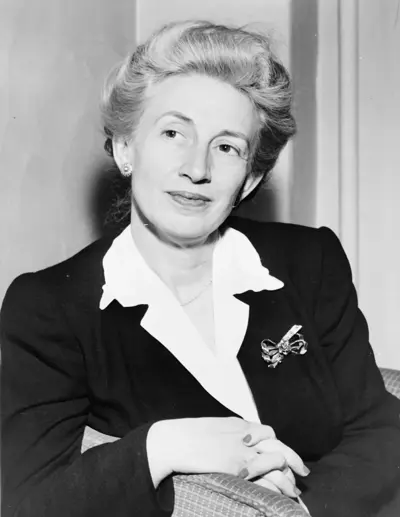
Lillian Eugenia Smith was a writer and social critic of the Southern United States, known most prominently for her best-selling novel Strange Fruit (1944). A white woman who openly embraced controversial positions on matters of race and gender equality, she was a southern liberal unafraid to criticize segregation and work toward the dismantling of Jim Crow laws, at a time when such actions virtually guaranteed social ostracism.
