Martin Luther King Jr. Quotes
There never was a moment of American history more honorable or more inspiring than the pilgrimage of clergymen and laymen of every race and faith pouring into Selma to face danger at the side of its embattled Negroes.
The March had begun in Selma with 600 marchers who were brutally beaten and harassed along the way. This brought clergy and lay people from the country over to join the protest march and when King gave the speech the marchers had swelled to 25,000.
Martin Luther King Jr., 1929-1968, Clergyman & Civil Rights Leader, Nobel Peace Laureate, Speech when the Civil Rights Marchers reached Montgomery, Alabama, Steps of the State Capital, March 25, 1965
Sourced by: Eigen's Political and Historical Quotations

At the time the Democratic Politicians of the South went to extremes from refusing to register Black voters to countenancing assault, torture and even murder of Blacks who organized voter registration. When the racists switched to the Republican party, is was Republican politicians who tried to make voter registration and voting more difficult for minorities, but the means and degree of these efforts were very mild compared to what is was when Rustin uttered this quotation.


She was one of the first prominent white southerners to denounce racial segregation. Also, she supported Martin Luther King’s protest organization in Montgomery long before most other whites.


The planning and management of the March on Washington of 1963 was dominated by well educated and/or very experienced leaders of Middle Class type institutions—churches, labor unions, governments, educational institutions, and even middle class entertainment. A few Black critics felt that the deep South Black Sharecroppers were not well represented, intellectually or culturally. To many this was the great genius of the March on Washington where there were a hundred million Americans prepared to find great fault with the march and what they saw was a reflection of themselves trying to protest a grievance.


His strategy was to fill the jails of Birmingham, and asked the young people to help. The next days saw virtually all the Birmingham high school students our of school and in the streets protesting which was then against the un-Constitutional laws of Birmingham and Alabama. The students were arrested by the droves and the white authorities, believing that they were being firm against “radical lawbreakers”, fell into the trap, and became a travesty to most of the country and the rest of the world and the hundreds of jailed students beaten and assaulted raised the consciousness of whites as well as Blacks.


Pickering referred to Jefferson as the “Negro President” because he believed his presidential power rested on the shoulders of slavery.
This quotation was documented by an FBI illegal wiretap of King and his associates. The illegal wiretap had been insisted upon by FBI Director J. Edgar Hoover who was a racist and somewhat of a paranoid about communists. However, Attorney General, Robert F. Kennedy personally approved the illegal wiretap.

This was of course in addition to their moral position as taught by their religions.

There was a large contingent of whites who showed up—many invited and expected and many who came on their own.


Hoover and the FBI were supposed to be enforcing Federal law. However, they could not find any criminal activity on the part of Martin Luther King Jr. They regarded the Civil Rights Movement as a revolutionary threat to the nation. See {620621} and {74219} . So the FBI in an incredible abuse of power, had a meeting of its top officials to plan a strategy for destroying King as a Negro leader in America. We look back on this era where officials who were never elected by anyone, and having no authority from an elected official, took it upon themselves to decide who leaders in America would be.


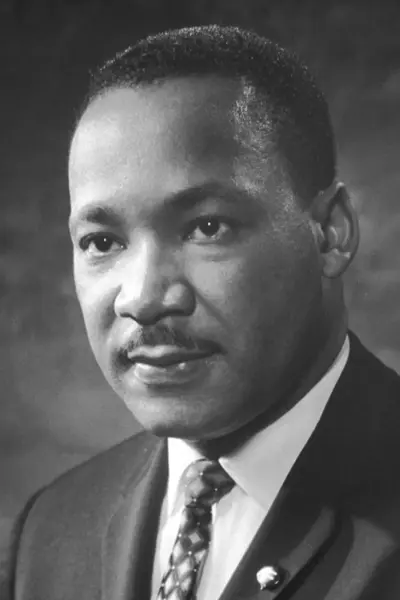
Martin Luther King Jr. was an African American Baptist minister and activist who became the most visible spokesperson and leader in the American civil rights movement from 1955 until his assassination in 1968. King advanced civil rights through nonviolence and civil disobedience, inspired by his Christian beliefs and the nonviolent activism of Mahatma Gandhi. He was the son of early civil rights activist Martin Luther King Sr.
