Alpheus Beede Stickney Quotes
The managing officers were now potentates,--'railroad magnates,' 'railroad kings.' They traveled in state, surrounded by their personal staff, the heads of the different departments, who were almost as important personages as their chiefs. When they visited a town on their lines, the principal business men rushed to greet them. The fat of the land was at their disposal. Merchants sent baskets of champagne to the heads of the traffic departments and sealskin jackets to their wives, while on the other hand, special rates were liberally bestowed upon their favorites. Special clerks were required to be wholly employed in issuing free passes. Judges and juries seemed to have a perceptible bias in their favor, the brightest attorneys were retained, and minor officials were glad to grant them favors. The country press was subsidized with passes for editors, their families and their friends.
Stickney was a maverick among Railroad executives of the time. He favored some regulation by the Federal Government and was opposed to the most flagrant abuses of the railroads.
Alpheus Beede Stickney, 1840-1916, Founder & Head of the Chicago Great Western Railway, Quoted in Charles McCarthy, The Wisconsin Idea, 1912
Sourced by: Eigen's Political and Historical Quotations


She was the first Black woman to be elected to Congress and was the first Black woman to actively campaign for the Presidency

Bryan had reached the point where he advocated public financing of campaigns.

The “rebate agony” referred to a corrupt practice of the Railroads and the Large Monopolies. The railroads charged a very high rate for the transportation of important products like beef and oil. However, secretly they gave back a large percentage of the transportation rate charged to the trusts. They in turn could cut their prices and undersell all the smaller competitors who were paying “full freight” and could not afford to match the lower price. As soon as the smaller competitors were driven out of business in an area, the trust raised its rates even higher than they charged originally. The Railroad had made a small but reasonable profit on the freight of the trusts but they were guaranteed all their business. They also made huge profits on the higher rates that the small companies paid until those companies were driven out of business. Journalists like Ray Baker and Ida Tarbell had uncovered the rebate scheme which enabled the trusts to steal high amounts from the general public through unreasonably high prices. President Theodore Roosevelt was committed to try and regulate the railroads and not allow rebates but charge the same public rate to all with no rebates. Socialists like Sinclair, thought that this attempt would be hopeless—that the damage had already been done, and the trusts now had so much money that they could buy state legislatures and many in Congress to preserve their dominance.

Most people at the time thought that political corruption was limited to politicians being bribed with money to do or not to do things. It dawned on Stephens that beyond the payment of money per se—that it could involve financial arrangements like shares in companies or tips for investment, business arrangements for family companies then or in the future or even social favors. He was the first political observer to not the variety of forms of political corruption.


George Barnsedale Cox, 1853–1916, was the corrupt, Republican, political boss of Cincinnati where he amassed a fortune of millions of dollars—hundreds of millions in today’s money—as a city party official in the early 1900s.


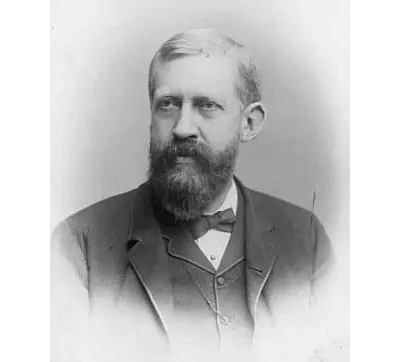
Alpheus Beede "A.B." Stickney was the first president of the Chicago Great Western Railway, from 1884 to 1909.
