Carlos Fuentes Quotes
No government functions without the grease of corruption.
Fuentes, Carlos. The Eagle's Throne. Translated by Ezra E. Fitz, Random House, 2006.


Her co-leader, Martin J. Healy, was accused of accepting a bribe from a judge in exchange for his appointment. What makes this quotation particularly interesting is the fact that she was speaking before a reform organization, yet it is clear that Mathews herself saw no immorality in party officials accepting kickbacks. One of the major problems in reform was that most of the Tammany Hall leaders and voters had a different morality from the reformers and many genuinely thought that the situation as it existed was only “fair.” Reform, as with civil rights, required a transformation of public opinion and sense of right and wrong. See {626674} for one of her solutions to political corruption.


Most people at the time thought that political corruption was limited to politicians being bribed with money to do or not to do things. It dawned on Stephens that beyond the payment of money per se—that it could involve financial arrangements like shares in companies or tips for investment, business arrangements for family companies then or in the future or even social favors. He was the first political observer to not the variety of forms of political corruption.


Allen was so audacious about his bribes that he had the CBC initials embroidered on red baseball hats and he, his fellow officers, and many Alaskan politicians actually wore the hats and joked about their bribe taking.


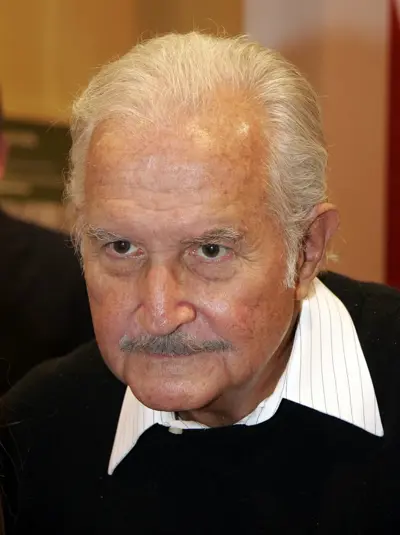
Carlos Fuentes Macías was a Mexican novelist and essayist. Among his works are The Death of Artemio Cruz (1962), Aura (1962), Terra Nostra (1975), The Old Gringo (1985) and Christopher Unborn (1987). In his obituary, The New York Times described Fuentes as "one of the most admired writers in the Spanish-speaking world" and an important influence on the Latin American Boom, the "explosion of Latin American literature in the 1960s and '70s", while The Guardian called him "Mexico's most celebrated novelist". His many literary honors include the Miguel de Cervantes Prize as well as Mexico's highest award, the Belisario Domínguez Medal of Honor (1999). He was often named as a likely candidate for the Nobel Prize in Literature, though he never won.
