Herbert Spencer Quotes
Equity knows no difference of sex. In its vocabulary the word man must be understood in a generic, and not in a specific sense
This is a remarkably modern statement for the time.
Herbert Spencer, 1820-1903, English Social Philosopher, Social Statics : or, The Conditions Essential to Happiness Specified, and the First of them Developed, 1851
Sourced by: Eigen's Political and Historical Quotations

This quotation illustrates the statement of a reform principle to appease international interests in basic human rights. This type of statement provides the “fig leaf” for the UN and other organizations to pretend that international standards of human rights are being maintained. Nasser did not implement this principle. By the beginning of the 21st century, Egypt was finally making some progress on women’s equality issues. The prohibition on female members of Parliament—{586723}—had been reversed but women were still not allowed to be judges in a criminal trial, laws against infant female circumcision, and other elements of female equality were still not in existence.

This remarkable statement was written in about 1840 and there was probably then few people of either gender who would think such a thing possible.


She was overly optimistic. She would be dead for 30 years before women got the vote and some would argue that full equality has not been reached yet.


See Belva Lockwood {609865} for the view of the woman who lobbied heavily for the law and became the first woman to practice before the Supreme Court.


This was de facto Equal Rights legislation.


Stowe persuaded Lockwood to stand for President. They tried to recruit a man for the Vice Presidential nomination, and when they could not, Stowe became the first female to become a Vice Presidential candidate.


Samuel Langhorne Clemens, 1835-1910


While this was a type of “Equal Rights Amendment”, It emphasized dignity rather than operations. For example, adultery was made a crime if committed by a woman (not for a man), And women could be dismissed from a job, simply because they were pregnant. And unusual aspect of this quotation is the fact that it applies to equality of dignity of Social status. In America we have this as an unwritten concept of fairness and egalitarianism, but it is not followed very much and certainly not guaranteed by our Constitution.

Mount Holyoke College was one of the finest women’s colleges. This line drew applause, although as we look back on it, the statement seems hypocritical. Women at the time could not vote and in some states even own property. They could not serve in the military and were barred from most executive and technical jobs, government as well as private. President McKinley was not a public advocate for women’s rights or equality. He was however, at least in favor of higher education for women—something which many politicians opposed at the time.

She was the first woman legal graduate in Missouri and the third in the nation.


Jinnah was a modern Islamist who saw the role of females in a modern context. He, like the Indian Hindu leaders were in a sense products of the West and Western government and education. He would be very surprised that in his Pakistan men can murder their female relatives who they believe have dishonored the family, or that women would not be educated in the Madrassas, or that authorities could sentence a female relative of a man deemed guilty of seduction to be gang raped, but that is what happens in modern Pakistan. Jinnah and many of the early leaders believed that their new government could modernize Islam but the control and influence went the other way. Pakistan became a religiously dominated autocracy rather than the democracy that Jinnah foresaw.
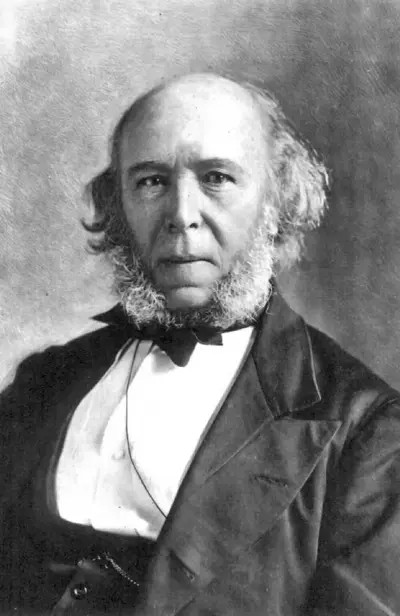
Herbert Spencer was an English philosopher, biologist, anthropologist, and sociologist famous for his hypothesis of social Darwinism whereby superior physical force shapes history. Spencer originated the expression "survival of the fittest", which he coined in Principles of Biology (1864) after reading Charles Darwin's On the Origin of Species. The term strongly suggests natural selection, yet Spencer saw evolution as extending into realms of sociology and ethics, so he also supported Lamarckism.
