Mel Tillis Quotes
And they turned around and leased it to The Assembly Of God Churches - their headquarters are in Springfield, Missouri. They leased it to them for the first year. Then, after the first year, they will donate it to the church.
Tillis, Mel. "Gary James' Interview With Mel Tillis." Interview by Gary James. Classic Bands, 2002, www.classicbands.com.


Radical as this idea then was, it actually came to pass in Italy and almost all of Europe. In Mexico, the reaction against church property was so great that religions may not even own the ground on which their churches stand.

At the time of the writing she was an ex-queen. See {618099} for Frederick’s own view of the Greeks. The Crusades were going badly for the Christians at this point. The Greek Emperor had, after promising to be a part of the Christian alliance, made a separate treaty with Saladin and the Muslims, making him an outcast and sewing the seeds of the schism between the Eastern and Western Christian Churches. In a year, the Western Christians would sack Constantinople, and murder and plunder their fellow Eastern Christians. The two previous Greek Emperors were suspect from the Western point of view, but the treaty with Saladin “proved” what had been suspected about the Greeks who were now allied with the hated Muslims.

Note the opposition to freedom of speech for contrary theological views. This has been typical of most religions whenever they could exercise or influence state power.
opposition to the church of the time
Olivi was a brilliant scholar who ran afoul of the religious authorities on several occasions. He was accused of being a heretic for his writings, but was exonerated after intensive trials and debates. In this quotation, he attributed the religious error of Jews and others, not to the anti-Christ, human venality, or even fault of character, but from a difference in human perspective. He was a pioneering original thinker, who while not well appreciated in his lifetime, had a significant cult following including several cardinals of The Church that arose after his death. However, other conservative forces then decided that he was a heretic after all. They burned his writings and destroyed his tomb. Today, there is a street in France named for him.


The active involvement of organized religion in partisan politics is nothing new. The Methodist church not only actively campaigned for Abraham Lincoln, but viewed him as the selection of God.
“Zakat” is the practice of giving a percentage of one’s property to the poor. This is similar to the concept of tithing and charity in Christianity and Judaism. One difference today is that many of the Muslim nations use the religious requirements as an element of state policy and the social safety net is intertwined by state and church. The Mormon Church in early Utah had the same amalgam of church and state, but that was abandoned in favor of separation of church and state. Turkey went through the same shift in the Ataturk revolution.


This anarchist vision of religion in the state is that of America with its first amendment, The reason that religion was still an issue for American Anarchists were that at the time and earlier, community norms and customs throughout the country dominated life and the First Amendment separation of church and state was commonly transgressed with few citizens willing to stand up against the community majority and force the issue in courts or in the political arena. That changed in the remainder of the 20th century and while there still are violations, they are relatively few in the 21st century.


Much of the Catholic Church was greatly influenced by Aquinas long past his death. This quotation laid the foundation for the view, that anything the Church does, even if seemingly wrong or absurd, has some positive value. Here, Aquinas refused to totally condemn the Church practice of giving indulgences (official absolution for serious sins) to the rich in exchange for money. His view assumes that there must be some good in all acts of the church, even if we can not now determine it. This view makes reform very difficult even after the evil is recognized. Some theologians argue that although this perpetuates some bad practices, it provides stability and prevents leaders of the church from constantly trying to adapt the church to meet current popular or civil criticism.
Saint Benedicta was born and brought up as a Jew and converted to Catholicism. She and a few other leading German Catholics spoke out forcefully against Nazi crimes and immoralities. She was one of the few German Catholics who wanted the Pope to act more forcefully in Germany. The most controversial aspect of the Pontificate of Pius XI was his relative silence and failure to use the powers of the church and excommunication to condemn and control the Nazi rise to power and their, aggression, discrimination, and atrocities including mass murders. The Pope did occasionally speak out condemning the worst of the German Nazi outrages to morality, but he did not do so very vigorously or order the German Cardinals and other bishops to do so. Supporters of Pius XI point out that the entire Catholic Church in Germany was in peril. The Nazis might have shut down their churches, jailed or murdered priests and seize church property. Many of the German Catholics, including the clergy, were Nazi party members or supporters, and he feared a political schism of German Catholics as well. And Italy, surrounding the Vatican was then under the control of the Italian Fascists who were allies of the Nazis, The Vatican itself and its staff were themselves vulnerable and could have been easily occupied. Apologists for Pius XI observe that the entire Church and its leadership could have been wiped out had they ignored the practicality that the Fascists were in control and would tolerate the Church just so far. Saint Teresa and other Catholics who were outspoken, along with the few Protestant Lutheran Clerics who opposed the Nazis, were indeed arrested and Saint Teresa was finally murdered at the Auschwitz concentration camp. Even that did not galvanize Pope Pius XI to assertive anti Nazi action. The records of the Vatican for that period have not been opened for public study so it is not known for sure that the Pope even saw Saint Teresa’s letter or it was intercepted by the strong pro Nazi faction in the Vatican. That year, Pius signed a Concordat (agreement) with the Nazi Government which many in the Vatican naively believed would control and limit the worst of the Nazi actions. But by 1937, Pius condemned the “violations” of the Concordat and Nazi anti-Semitism as well (encyclical written in German, Mit brennender Sorge (With Burning Anxiety). His critics observe that he went no further, even with the Catholic Nazi clerics and other Catholics. The Carmelite order tried to protect Saint Teresa who was then just a non and leading Catholic intellectual (she had a PhD in philosophy) by sending her to a Carmelite facility in Holland. But the Germans overran the Netherlands, arrested her and sent her to Auschwitz where she was martyred. She was beatified by Pope John Paul II in 1987.

This quotation is classic in that it illustrates a fundamental difference between a political and religious view of rights. Politically a citizen is entitled to rights with no requirement or condition of responsibility. Politically, we may desire and applaud or even reward responsible behavior, but we may not condition the rights on someone’s version of responsible use of the rights. Indeed, the real test is if people have rights who are generally thought to be irresponsible. See {633640} .

Of all the Western Colonial Powers, Spain was the worst. They took the most from their possessions and contributed the least. Worst, they killed off almost all the indigenous people.

Samuel Langhorne Clemens, 1835-1910
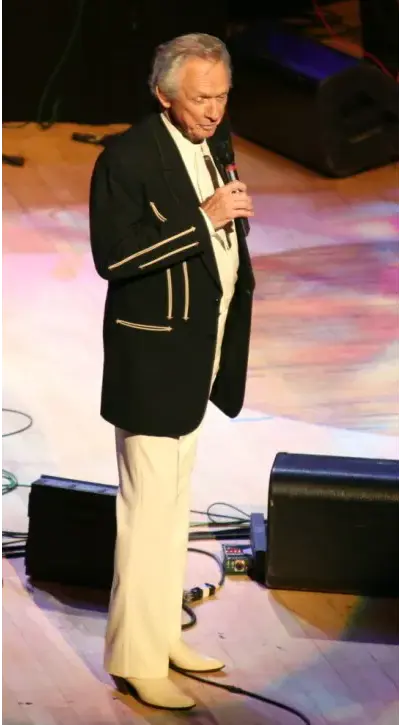
Lonnie Melvin Tillis was an American country music singer and songwriter. Although he recorded songs since the late 1950s, his biggest success occurred in the 1970s as part of the outlaw country movement, with a long list of Top 10 hits.
