Gilbert Haven Quotes
The duty of the church is to march to the ballot box, an army of Christ, with the banners of the cross, and deposit, as she can, a million votes for her true representative …
The active involvement of organized religion in partisan politics is nothing new. The Methodist church not only actively campaigned for Abraham Lincoln, but viewed him as the selection of God.
Gilbert Haven, *, Methodist Bishop, 1864
Sourced by: Eigen's Political and Historical Quotations


This was the third of her books that were banned in Bangladesh.


The argument over whether or not the Founding Fathers intended a religious—Christian—foundation in the formation of America is not just a debate of modern times, but has been debated even in the next generation of politicians. Webster, believed that it was.


Responding to criticisms by Rev. Jerry Falwell about America's moral decline: See also, Mark Russell

Bangladesh had fared very poorly as a part of Pakistan. When it revolted and became independent, it adopted a secular government whereas Pakistan had been, and is, a heavily Islamic state. However, the vast majority of Bengalis were Muslim and some were extreme fundamentalists. Rahman was under constant pressure to make the government more “Islamic” and while he did so somewhat, he tried to advocate for separation of church and state. Bangladesh is not as extreme as Pakistan which is not yet a theocracy but religious forces dominate every aspect of the society.

While he did not believe that clerics should engage in politics, he did believe that Islamic values and law should be embodied in the nation’s constitution and laws.


Rushdoony was a intellectual Christian extremist who advocated a legal return to literal, Biblical, Mosaic Law -- that of the first 5 books of the Old Testament.
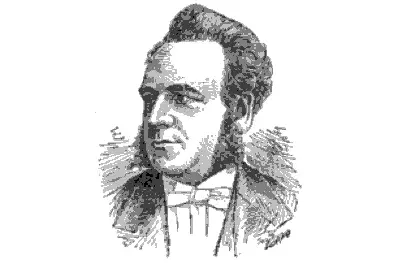
Gilbert Haven was a Bishop of the Methodist Episcopal Church, elected in 1872. He was consecrated a bishop on May 24, 1872 at the Brooklyn Academy of Music in New York. He was an early benefactor of Clark College (now Clark Atlanta University), visualizing it as a university of all the Methodist schools founded for the education of freedmen (former African American slaves). He succeeded Bishop Davis Wasgatt Clark (for whom Clark College was named) as the President of the Freedman's Aid Society of the Methodist Episcopal Church.
