Ali al-Sistani Quotes
Clergymen should not get involved with politics.
While he did not believe that clerics should engage in politics, he did believe that Islamic values and law should be embodied in the nation’s constitution and laws.
Ali Sistani, Iraqi Grand Ayatollah, Senior Moslem Cleric in Iraq
Sourced by: Eigen's Political and Historical Quotations


The Islamic Holy Book even recommends against friendships with Christians and Jews. See {584381}.

The treaty, which was also ratified by the Senate, was actually drafted by Joel Barlow, the U. S. Consul in Tripoli. It was the first official statement of the United States on its religious basis or lack thereof.


Justinian, like many civil political leaders before and after him, took great pains to minimize the civil authority of the church. Separation of church and state is not a modern notion, though it was harder to accomplish in antiquity. Rulers would want to coopt the religion to help legitimize their rule, but tried to keep the church as weak as they could unless another religion was challenging for supremecy.

This verse has been one of the bases of Muslim theocratic states like Iran’s claim to legitimacy.


Husayn Ali Nuri. This quotation illustrates one of the reasons that the Muslim Iranian fundamentalists are so fearful of Bahai, a reform offshoot of Islam. For the orthodox Muslim there must be no separation of church and state—they are one and the same. The Bahai minority of Iran have been hunted down and in many cases killed on the grounds that they were heretics and blasphemers.

The Ataturk reforms modernized Turkey and turned it into the most modern and democratic of the Islamic countries. However, there were always forces and populist governments that tried to erode the Ataturk reforms—especially secularism.


Bangladesh had fared very poorly as a part of Pakistan. When it revolted and became independent, it adopted a secular government whereas Pakistan had been, and is, a heavily Islamic state. However, the vast majority of Bengalis were Muslim and some were extreme fundamentalists. Rahman was under constant pressure to make the government more “Islamic” and while he did so somewhat, he tried to advocate for separation of church and state. Bangladesh is not as extreme as Pakistan which is not yet a theocracy but religious forces dominate every aspect of the society.
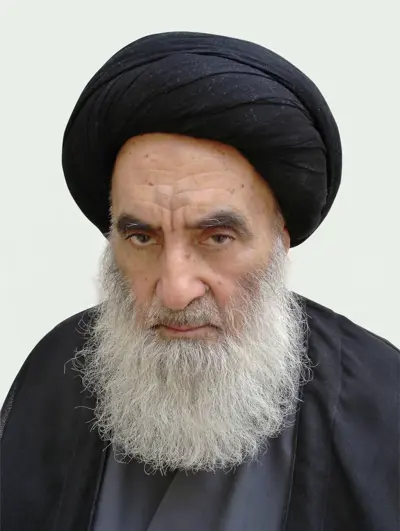
Grand Ayatollah Sayyid Ali al-Husayni al-Sistani, commonly known as Ayatollah Sistani, is one of the most influential Iraqi Shia marja' of Iranian origins living in Iraq.
