Benjamin Tucker Quotes
The Anarchists most certainly believe in the Church; only they insist that all its work shall be purely voluntary, and that its discoveries and achievements, however beneficial, shall not be imposed upon the individual by authority.
This anarchist vision of religion in the state is that of America with its first amendment, The reason that religion was still an issue for American Anarchists were that at the time and earlier, community norms and customs throughout the country dominated life and the First Amendment separation of church and state was commonly transgressed with few citizens willing to stand up against the community majority and force the issue in courts or in the political arena. That changed in the remainder of the 20th century and while there still are violations, they are relatively few in the 21st century.
Benjamin Tucker, 1854–1939, Political Philosopher & Individualism Anarchist, Liberty and Politics
Sourced by: Eigen's Political and Historical Quotations


The wording was rejected and the delegates insisted upon the original proposed language: “Well aware that Almighty God hath created the mind free …” This is a very important historical quotation because it shows that Henry and a few others wanted to make the society Christian centric, However, the majority insisted that it be non-sectarian. Many of the delegates rejecting the “Jesus Christ” language were themselves practicing Christians, but they were aware of the terrible religious wars and strife in Europe and between Christians and Muslims as well as the persecution of Jews, Quakers, and other sects; they did not want that in America so they rejected the idea of an established Christian Church or culture.


This appears to be one of the first religious groups to withdraw and separate from a state church.


A portion of this quote can be found in the Jefferson Memorial in Washington, D.C.


In the American system, we do not oppose any religion. We do oppose the right of any religion to use the power of the state and governments to compel or use government resources to promote or subsidize their religion. Other countries have established churches or a national religion. In that sense, some religions perceive America objects to their religion because we do not make it our established religion. Opposing prayer in public schools is not opposing prayer. It is only opposing prayer in that specific context where all payers are paying including the non believers in that particular religion.

This quotation is important because it emphasizes an aspect of freedom of religion that is not usually discussed—the freedom to LEAVE a religion. As an Islamic reformer born in Iran, this notion is extremely important. Under Sharia—Islamic Law—capital punishment is required for anyone who converts from Islam to any other religion. This has been made a part of the civil law of many Islamic nations from Afghanistan to Saudi Arabia as well as Iran where Sharia IS the civil law. There is no other religion in the world which makes conversion away from the religion a capital crime requiring execution. Executing people who leave a religion is a major violation of the Universal Declaration of Human Rights.


This was a very interesting quotation in that there was no scripture of any religion that even mentions the United States nor which nations would lead the world and which should follow.


Williams was the first theologian who not only advocated religious toleration but argued that Christianity demanded it and the separation of church and state.
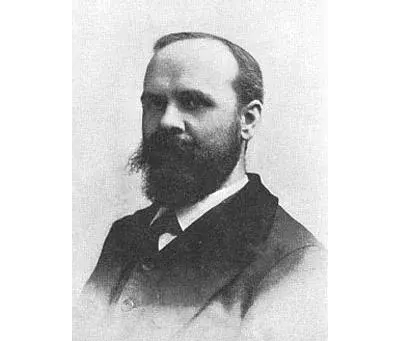
Benjamin Ricketson Tucker was an American anarchist. A 19th-century proponent of individualist anarchism which he called "unterrified Jeffersonianism", Tucker was the editor and publisher of the American individualist anarchist periodical Liberty (1881–1908) as well as a member of the socialist First International.
