Julius Streicher Quotes
Who are the moneylenders? They are those who were driven out of the Temple by Christ Himself 2000 years ago. They are those who never work but live on fraud.
Streicher, Julius. Kampf dem Weltfeind: Reden aus der Kampfzeit. Verlag Der Stürmer, 1938.


Summarizing his conclusions of the Judiciary Committee investigations regarding Wall Street and the bankers' role in the Great Depression:

Those who devour interest will not stand except as stands one whom Satan has driven mad by his touch
Interest is forbidden in all transaction, both business and personal.


Much if the American industrial revolution was assisted by government subsidies of one kind or another. Railroads, telegraph, armaments, foundries are just a few.

In the quoted passage, it describes Diogenes as observing a thief being arrested in one of the religious temples by the officials of the temple. He had pilfered one of the temple treasures. Not unlike modern times, most religious organizations raised money be getting donations from the public. Some of the means of many of the religious groups are and have been of dubious morality and if used in commerce would generally be considered fraud. This quotation shows that this is not a new phenomenon nor was it limited to monotheistic religions.

Cunningham obtained much of his support from Christian fundamentalists. Once in office, he repeatedly lied about his activities, took massive bribes, arranged defense contracts for companies who had minimal qualifications but paid him, threatened civil servants and members of his own party, obtained a yacht illegally, cheated on his income taxes, attended orgies organized by the companies that were paying him. His values were as far from Christian values as can be. The judge who sentenced him to jail described him as “the most corrupt Congressman in American history,” but he knew, like many politicians, how to play the Christian Fundamentalists.

The States sold bonds to finance the Revolutionary War. Some states had better prospects for redeeming their bonds than others. Georgia, South Carolina and North Carolina in particular had poorer prospects than most and their bonds were selling at about 25 cents on the dollar. Alexander Hamilton, then the Secretary of the Treasury, wanted the new Federal government to assume the state’s war debt and pay off the bonds. He made his proposal for how he would accomplish this on January 14, 1790. He delivered his report and proposal to Congress “Report on the Public Credit”. As soon as Hamilton’s proposal was read in Congress, sophisticated speculators set off for the Southern States to buy up as many bonds as they could before the owners found out that a Federal bail-out was under serious consideration. They could easily double, triple or even quadruple their money. To Jackson this was gross immorality. Other representatives had a different point of view. See {619928} & {619929}.


Jefferson was a deist but had little love for the organized religions and did not consider the Bible as the revealed word of God.


There were little controls over usury in his time in India. Villagers often paid 500% or more to borrow money in a necessity like needing critical health care.

There is a school of thought that since Jesus Christ preached care for the poor and have-nots that he was a socialist. Others believe that this is simply a commonality between some of the teachings of Christ and some aspects of socialism. The irony is that Chavez’s brand of socialism and polarization of society was in very large part contrary to Christ’s teachings, though there have been few governments that had ever met Christ’s standards of morality including and especially Christian, church-dominated government’s and theocracies.


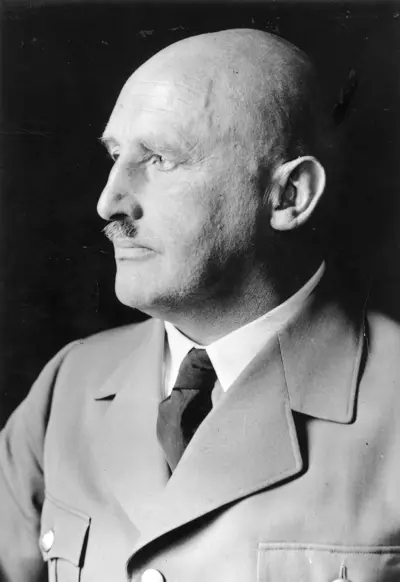
Julius Streicher was a member of the Nazi Party, the Gauleiter (regional leader) of Franconia and a member of the Reichstag, the national legislature. He was the founder and publisher of the virulently antisemitic newspaper Der Stürmer, which became a central element of the Nazi propaganda machine. The publishing firm was financially very successful and made Streicher a multi-millionaire.
