Ezra Pound Quotes
Usura slayeth the child in the womb It stayeth the young man's courting It hath brought palsey to bed, lyeth between the young bride and her bridegroom
Pound, Ezra. The Cantos of Ezra Pound. New Directions Publishing, 1993, p. 230.

Those who devour interest will not stand except as stands one whom Satan has driven mad by his touch
Interest is forbidden in all transaction, both business and personal.


Summarizing his conclusions of the Judiciary Committee investigations regarding Wall Street and the bankers' role in the Great Depression:

Manava Dharma Shastra. Ancient Jewish law prohibited the charging of interest. The early Christian world frowned upon it and morally and legally vacillated from time to time. Islam outlawed interest completely and some orthodox Muslims and Muslim counties loans with interest are illegal. However the ancient Hindus not only allowed interest but felt that it was such an important component of the economy that there were numerous regulations, religions and legal regulating it. This example made 5 percent the maximum allowable interest rate. This text is a part of the Hindu Holy Texts. Hindus believe that Manu was a prophet whose text is revealed or inspired.


Essentially, the Council voted to close all the banks of the day and get rid of all the bankers. Without banking economic development of Christian (Catholic) Europe stagnated and did not thrive until the Borgia’s used their banking prowess to actually attain the Papacy. Ironically, Christians, Jews and Muslims all had banned banking—usury—the charging of interest for borrowed money—as a serious sin. To this day there are orthodox fundamentalists of all three religions who decry modern banking, but the majority of Christians and Jews no longer have any problem with banking, and while the Muslims generally still decry it as a sin, the wealthy Muslims have come up with various fig leaves where they pretend that banking us not usury, and in the modern world, although they are castigated by a mullah or two, the essence of capitalism goes on even in Muslim countries.

Money was backed by gold then and therefore limited and the country was growing, and needed more money to finance development. But the only way to then have more money in circulation was for the government to borrow it from the people who had it—mostly wealthy people in the East and in England. These gold owners charged very high interest rates. However there was much more silver in the U. S. and more was being mined every day. So for many populists, the answer was to make silver a basis for money. But those who had gold backed money wanted to maintain the shortage of currency in the growing nation The populists naively thought that if there was sufficient money supply all other problems like labor strife would disappear. Some did when the money supply was finally expanded, but it was no panacea.

There were little controls over usury in his time in India. Villagers often paid 500% or more to borrow money in a necessity like needing critical health care.


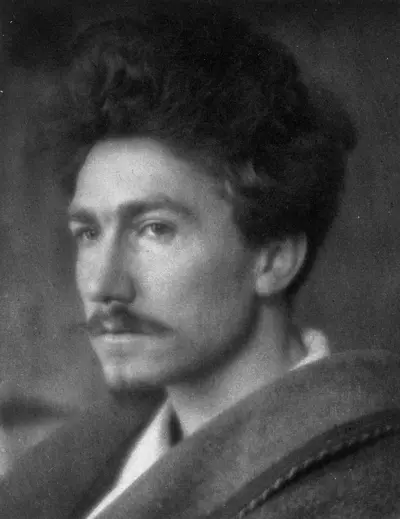
Ezra Weston Loomis Pound was an expatriate American poet and critic, a major figure in the early modernist poetry movement, and a fascist collaborator in Italy during World War II. His works include Ripostes (1912), Hugh Selwyn Mauberley (1920), and his 800-page epic poem, The Cantos (c. 1917–1962).
