James Baird Weaver Quotes
This labor controversy the world over is purely a question of money, and nothing else. There is just enough money in this country to-day to enable the corporations to corner it. Just enough to enable the banks and the usurers to extort usury .... there are three classes of vampires who are sucking up the last drop of the blood of honest toil the land monopolies
Money was backed by gold then and therefore limited and the country was growing, and needed more money to finance development. But the only way to then have more money in circulation was for the government to borrow it from the people who had it—mostly wealthy people in the East and in England. These gold owners charged very high interest rates. However there was much more silver in the U. S. and more was being mined every day. So for many populists, the answer was to make silver a basis for money. But those who had gold backed money wanted to maintain the shortage of currency in the growing nation The populists naively thought that if there was sufficient money supply all other problems like labor strife would disappear. Some did when the money supply was finally expanded, but it was no panacea.
James Baird Weaver, 1833–1912, U. S. Congressman (Greenback Party, IA), Twice Presidential Candidate (Greenback Party and then The People’s Party (Populists), House Debate, 1886
Sourced by: Eigen's Political and Historical Quotations


Webster was taking regular bribes from large corporations and even complained when his payments were late. So he might have had a pro-large business bias. At the time taking bribes even if there was a quid pro quo was not illegal or even “unethical” by then Congressional rules.


In 1902 there was a major coal strike in which Roosevelt pressured the coal operators to make concessions to labor. The abuses of some of the large monopolistic enterprises were turning large segments of America against capitalism. TR always believe that he saved capitalism from its own self destruction. The same has been felt about Franklin Delano Roosevelt who many believe saved American capitalism in the Great Depression.


Grandfather of President John F. Kennedy. Standard Oil had a monopoly on kerosene, a major fuel at the time. The company announced an extra $17 million dividend to shareholders and then raised the price of kerosene throughout the country to pay for it. Some, like Fitzgerald, saw this as a de facto regressive tax levied by a private corporation on the poor and middle class.
Roosevelt shocked the conservative members of his own party with this statement. Labor unions were not then an accepted concept in American society. Anti trust legislation and enforcement was in its infancy and companies in an industry commonly conspired as to price fixing, labor negotiations and market share allocations. TR had a scrupulous sense of fairness and equity.


While Ray was very sympathetic towards the strike, his father’s attitude was typical of that of business men across the nation. A picket line or demonstration was a “mob” and mobs should be broken up before they do physical damage to people or property. “Grape” and “canister” were types of ammunition for cannon that was used against personnel in war. One shell could kill 20-30 men in a crowd.

This statement during the First World War so frightened the Woodrow Wilson administration that they jailed Debs for saying it and other similar statements like {640245}. The statement was generally suppressed with few newspapers carrying it. The problem for the administration was that enlistments might decrease and force them to draft the wealthy and their sons which was, with very few exceptions, not acceptable to the “upper classes”.


some of the 1 percent Not all of the superrich in America are like this. Bill Gates and Warren Buffet, two of the richest Americans, for example, are supporters of these important programs for many citizens. However, the Koch Brothers, Senator Sanders best example, had $87 Billion and earned $12 Billion more that year. Yet they also made great efforts and spend large sums of money to take away the Social Security, Medicaid.


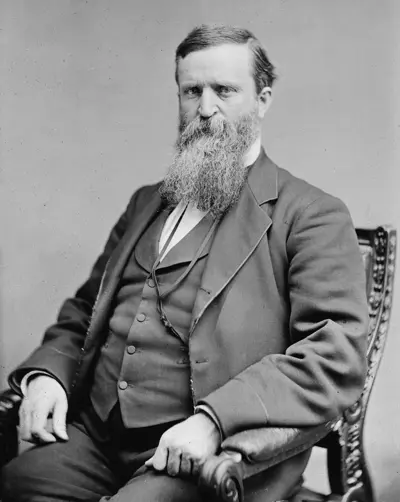
James Baird Weaver was a member of the United States House of Representatives and two-time candidate for President of the United States. Born in Ohio, he moved to Iowa as a boy when his family claimed a homestead on the frontier. He became politically active as a young man and was an advocate for farmers and laborers. He joined and quit several political parties in the furtherance of the progressive causes in which he believed. After serving in the Union Army in the American Civil War, Weaver returned to Iowa and worked for the election of Republican candidates. After several unsuccessful attempts at Republican nominations to various offices, and growing dissatisfied with the conservative wing of the party, in 1877 Weaver switched to the Greenback Party, which supported increasing the money supply and regulating big business. As a Greenbacker with Democratic support, Weaver won election to the House in 1878.
