John F. Fitzgerald Quotes
Never in the history of the world have corporations and monopolies been allowed to exist and thrive and extort money from the people as they are doing right now under our very noses.
Grandfather of President John F. Kennedy. Standard Oil had a monopoly on kerosene, a major fuel at the time. The company announced an extra $17 million dividend to shareholders and then raised the price of kerosene throughout the country to pay for it. Some, like Fitzgerald, saw this as a de facto regressive tax levied by a private corporation on the poor and middle class.
John F. (Honey Fitz) Fitzgerald, 1863-1950, Boston Mayor (Democrat), U. S. Congressman (Democrat, MA), Congressional speech, March 1900
Sourced by: Eigen's Political and Historical Quotations


His last speech before his appointment to the court.


If there would be free competition in banking as opposed to monopolies in each area, This is the first major history of banks written in the United States. At the time, there was hardly any competition amongst banks. Each bank had a do facto or official monopoly in its area. In many communities of America, this is still true, but competition in banking has reached almost all high density areas of the country.

The Kimberly and Comstock lodes were natural deposits of copper and silver so close to the surface that it required very little work to remove the metal and sell the it.

Money was backed by gold then and therefore limited and the country was growing, and needed more money to finance development. But the only way to then have more money in circulation was for the government to borrow it from the people who had it—mostly wealthy people in the East and in England. These gold owners charged very high interest rates. However there was much more silver in the U. S. and more was being mined every day. So for many populists, the answer was to make silver a basis for money. But those who had gold backed money wanted to maintain the shortage of currency in the growing nation The populists naively thought that if there was sufficient money supply all other problems like labor strife would disappear. Some did when the money supply was finally expanded, but it was no panacea.

She had done a monumental exposé of the Standard Oil Company illegal and immoral activities. The public was so aroused that many reforms were instituted and the Standard Oil Company Trust was broken up into many smaller companies. Tarbell was then, in the words of S. S. McClure, “the most famous woman in America.”


She was then the European Commissioner for Competition


The President and his new appointee were half joking but many of the large corporations were attacking the new department and its head frequently. The extreme conservatives used the technique of personally discrediting the head of the agency to discredit the agency and its activities. The President himself was so popular that they did not dare attack him.

The “rebate agony” referred to a corrupt practice of the Railroads and the Large Monopolies. The railroads charged a very high rate for the transportation of important products like beef and oil. However, secretly they gave back a large percentage of the transportation rate charged to the trusts. They in turn could cut their prices and undersell all the smaller competitors who were paying “full freight” and could not afford to match the lower price. As soon as the smaller competitors were driven out of business in an area, the trust raised its rates even higher than they charged originally. The Railroad had made a small but reasonable profit on the freight of the trusts but they were guaranteed all their business. They also made huge profits on the higher rates that the small companies paid until those companies were driven out of business. Journalists like Ray Baker and Ida Tarbell had uncovered the rebate scheme which enabled the trusts to steal high amounts from the general public through unreasonably high prices. President Theodore Roosevelt was committed to try and regulate the railroads and not allow rebates but charge the same public rate to all with no rebates. Socialists like Sinclair, thought that this attempt would be hopeless—that the damage had already been done, and the trusts now had so much money that they could buy state legislatures and many in Congress to preserve their dominance.


While Roosevelt was considered a radical by ultra-conservatives, he was actually considerably to the right of William Jennings Bryan, the Democrats, and most of the populists of day who wanted much more draconian solutions to the abuses of corporations.
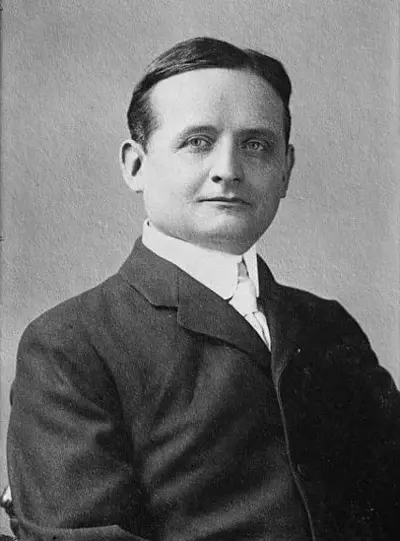
John Francis "Honey Fitz" Fitzgerald was an American Democratic politician from Boston, Massachusetts. He served as a U.S. Representative and Mayor of Boston. He also made unsuccessful runs for the United States Senate in 1916 and 1942 and Governor of Massachusetts in 1922. Fitzgerald maintained a high profile in the city whether in or out of office, and his theatrical style of campaigning and charisma earned him the nickname "Honey Fitz".
