Denis Kearney Quotes
Our moneyed man … have rallied under the banner of the millionaire, the banker, and the land monopolist, there railroad king, and the false politicians, to effect their purpose.
Denis Kearney Quoted in Michael Kazin, Trump and American Populism Foreign Affairs. November/December 2016 Volume 95, Number 6
Sourced by: Eigen's Political and Historical Quotations


The majority had held that the income tax or any tax based on income or wealth was unconstitutional (it was less than 2% only on income over $4,000--$101,000 in 2010 dollars). It took a Constitutional Amendment to have an income tax. See {587718}.


After Roosevelt, most eras of American politics more or less followed the pattern Roosevelt described herein as a “calamity”, with the anger becoming more or less intense. Jefferson thought that these were natural divisions of politics in all societies--{604810}. The thing that masked this for years was race and slavery. In Lincoln’s time there were liberals and conservatives in both parties if race were ignored. In Theodore Roosevelt’s era, he, Taft and others were generally liberal reformers, while a large number of Republicans were conservative supporters of the status quo. Some democrats were radical reformers like William Jennings Bryan while others were arch conservatives. Until 1964 and the Civil Rights Act there were many conservatives in the Democratic Party, but almost all switched to the Republican Party in anger. The Republican conservatives tended to drive the Republican liberals out of the party and for the last part of the 20th century Roosevelt’s “calamity” well described the American political scene, and the anger increased carrying partisan bitterness into the 21st century.

Jefferson, who was so brilliant and farsighted with respect to so many things from agriculture to government management had one great weakness. He really did not understand and generally disliked, banking, finance, industry, large manufacturing. His famous disagreements with Alexander Hamilton were mostly over these areas in which Hamilton was so effective at creating America with a strong national economy. Between them, America was started off in the right direction in all areas.


The “rebate agony” referred to a corrupt practice of the Railroads and the Large Monopolies. The railroads charged a very high rate for the transportation of important products like beef and oil. However, secretly they gave back a large percentage of the transportation rate charged to the trusts. They in turn could cut their prices and undersell all the smaller competitors who were paying “full freight” and could not afford to match the lower price. As soon as the smaller competitors were driven out of business in an area, the trust raised its rates even higher than they charged originally. The Railroad had made a small but reasonable profit on the freight of the trusts but they were guaranteed all their business. They also made huge profits on the higher rates that the small companies paid until those companies were driven out of business. Journalists like Ray Baker and Ida Tarbell had uncovered the rebate scheme which enabled the trusts to steal high amounts from the general public through unreasonably high prices. President Theodore Roosevelt was committed to try and regulate the railroads and not allow rebates but charge the same public rate to all with no rebates. Socialists like Sinclair, thought that this attempt would be hopeless—that the damage had already been done, and the trusts now had so much money that they could buy state legislatures and many in Congress to preserve their dominance.


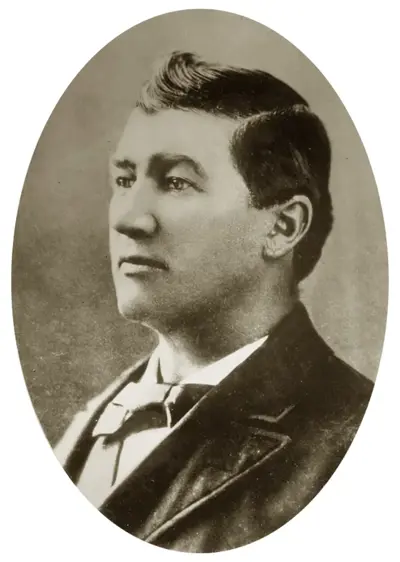
Denis Kearney (1847–1907) was a California labor leader from Ireland who was active in the late 19th century and was known for his racist views about Chinese immigrants. Called "a demagogue of extraordinary power," he frequently gave long and caustic speeches that focused on four general topics: contempt for the press, for capitalists, for politicians, and for Chinese immigrants. A leader of the Workingmen's Party of California, he is known for ending all of his speeches with the sentence "And whatever happens, the Chinese must go" (a conscious inspiration from Roman senator Cato the Elder's fame for ending all speeches with ceterum autem censeo Carthaginem esse delendam - "Furthermore, I consider that Carthage must be destroyed".)
