Henry Cabot Lodge Quotes
I say, Mr. President, and I say in all seriousness, that those packers in Chicago and those owners of the Standard Oil have done more to advance socialism and anarchism and unrest and agitation than all the socialistic agitators who stand to-day between the oceans.
Henry Cabot Lodge, 1850-1924, U. S. Congressman & U. S. Senator (Republican, MA), Remark to Theodore Roosevelt, 1906
Sourced by: Eigen's Political and Historical Quotations


There is a very interesting parallel with the views and statements of FDR at the same time.

The “rebate agony” referred to a corrupt practice of the Railroads and the Large Monopolies. The railroads charged a very high rate for the transportation of important products like beef and oil. However, secretly they gave back a large percentage of the transportation rate charged to the trusts. They in turn could cut their prices and undersell all the smaller competitors who were paying “full freight” and could not afford to match the lower price. As soon as the smaller competitors were driven out of business in an area, the trust raised its rates even higher than they charged originally. The Railroad had made a small but reasonable profit on the freight of the trusts but they were guaranteed all their business. They also made huge profits on the higher rates that the small companies paid until those companies were driven out of business. Journalists like Ray Baker and Ida Tarbell had uncovered the rebate scheme which enabled the trusts to steal high amounts from the general public through unreasonably high prices. President Theodore Roosevelt was committed to try and regulate the railroads and not allow rebates but charge the same public rate to all with no rebates. Socialists like Sinclair, thought that this attempt would be hopeless—that the damage had already been done, and the trusts now had so much money that they could buy state legislatures and many in Congress to preserve their dominance.

This futuristic work attempted to project American life in the year 2000—then 112 years in the future. It is remarkable how many elements he successfully predicted. In this quotation a character in 2000 looks “backward” and correctly describes what occurred well after Bellamy’s death. This prediction describes the early 20th century quite well.

By producing growth and an increasing standard of living and universal education, capitalism’s citizens have the time, education, and resources to protest and produce social unrest. However, that assumes that there is also a democratic state. For Schumpeter and many others, capitalism and democracy go hand in hand, but many point to historical examples of one developing faster than the other.

Jefferson, who was so brilliant and farsighted with respect to so many things from agriculture to government management had one great weakness. He really did not understand and generally disliked, banking, finance, industry, large manufacturing. His famous disagreements with Alexander Hamilton were mostly over these areas in which Hamilton was so effective at creating America with a strong national economy. Between them, America was started off in the right direction in all areas.


The Kimberly and Comstock lodes were natural deposits of copper and silver so close to the surface that it required very little work to remove the metal and sell the it.


She was referring to the high percentage of Rockefeller workers who were killed in industrial accidents with little or no management concern for workplace safety. In addition, she accused Rockefeller (and other very rich employers) of paying such low wages that full time workers lived in abject poverty and suffering the short lifespan that went with poverty then (and even today, but less so.)


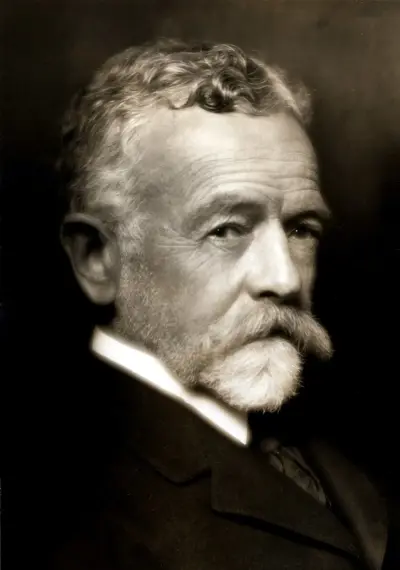
Henry Cabot Lodge was an American Republican politician, historian, and statesman from Massachusetts. He served in the United States Senate from 1893 to 1924 and is best known for his positions on foreign policy. His successful crusade against Woodrow Wilson's Treaty of Versailles ensured that the United States never joined the League of Nations and his reservations against that treaty influenced the structure of the modern United Nations.
