Richard Hildreth Quotes
Trade will no longer lie at the mercy of ignorant and reckless politicians, or at the mercy, no less to be deprecated, of a few purse-proud, domineering, dictatorial bank directors, who care not what mischief they do if they can but perpetuate their own exclusive privileges.
If there would be free competition in banking as opposed to monopolies in each area, This is the first major history of banks written in the United States. At the time, there was hardly any competition amongst banks. Each bank had a do facto or official monopoly in its area. In many communities of America, this is still true, but competition in banking has reached almost all high density areas of the country.
Richard Hildreth, 1807-1865, Historian, Explanation of the result If there would be free competition in banking as opposed to monopolies in each geographical area, The History of Banks: To Which Is Added a Demonstration of the Advantages and Necessity of Free Competition In the Business of Banking, 1837
Sourced by: Eigen's Political and Historical Quotations


The Kimberly and Comstock lodes were natural deposits of copper and silver so close to the surface that it required very little work to remove the metal and sell the it.


Vladimir Lenin. Terrorism has been an instrument of dictatorial states in general and most revolutions. Speculators as used by Lenin at this time were not just businessmen or capitalists. They were people who bought up and hoarded scarce resources and food, waiting for worse shortage, and then selling their food or other goods at very high prices. Or they would take advantage of the fact that farmers did not have enough to eat and only give them food if why would sign over their land rights. Soon honest businessmen were treated like speculators because they made people less dependent on the party and the government. Stalin, who followed Lenin was even more extreme and had speculators, businessmen and landowners executed.

Hoover, a brilliant administrator, seems to have been on the wrong side of most economic issues.


His last speech before his appointment to the court.

Grandfather of President John F. Kennedy. Standard Oil had a monopoly on kerosene, a major fuel at the time. The company announced an extra $17 million dividend to shareholders and then raised the price of kerosene throughout the country to pay for it. Some, like Fitzgerald, saw this as a de facto regressive tax levied by a private corporation on the poor and middle class.


Attempting to defend charges that his bank and others were engaged in monopolistic practices:


Most companies in a capitalistic system compete mightily to obtain monopolistic positions so they can avoid capitalistic competition thereafter.

The “rebate agony” referred to a corrupt practice of the Railroads and the Large Monopolies. The railroads charged a very high rate for the transportation of important products like beef and oil. However, secretly they gave back a large percentage of the transportation rate charged to the trusts. They in turn could cut their prices and undersell all the smaller competitors who were paying “full freight” and could not afford to match the lower price. As soon as the smaller competitors were driven out of business in an area, the trust raised its rates even higher than they charged originally. The Railroad had made a small but reasonable profit on the freight of the trusts but they were guaranteed all their business. They also made huge profits on the higher rates that the small companies paid until those companies were driven out of business. Journalists like Ray Baker and Ida Tarbell had uncovered the rebate scheme which enabled the trusts to steal high amounts from the general public through unreasonably high prices. President Theodore Roosevelt was committed to try and regulate the railroads and not allow rebates but charge the same public rate to all with no rebates. Socialists like Sinclair, thought that this attempt would be hopeless—that the damage had already been done, and the trusts now had so much money that they could buy state legislatures and many in Congress to preserve their dominance.


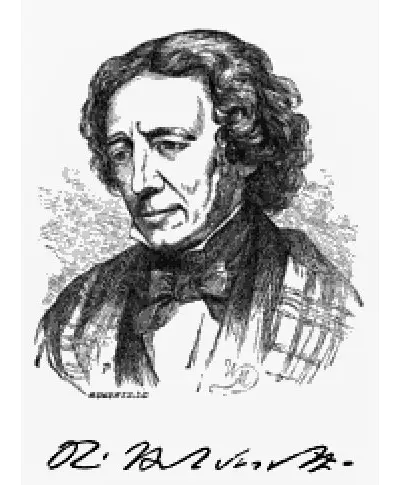
Richard Hildreth, was an American journalist, author and historian. He is best known for writing his six-volume History of the United States of America covering 1497–1821 and published 1840-1853. Historians consider it a highly accurate political history of the early Republic, but with a strong bias in favor of the Federalist Party and the abolition of slavery.
