William O. Douglas Quotes
One aspect of modern life which has gone far to stifle men is the rapid growth of tremendous corporations ... The disappearance of free enterprise has led to a submergence of the individual in the impersonal corporation.
His last speech before his appointment to the court.
William O. Douglas, 1898-1980, U.S. Supreme Court Justice, Chairman, Security & Exchange Commission, Speech, Fordham University Alumni Association, New York City, February 9, 1939
Sourced by: Eigen's Political and Historical Quotations


The National City Company was formed expressly as an attempt to dominate and monopolize the United States economy. It was a holding company that included Standard Oil, National City Bank, 16 other banks, and the Union Pacific and Southern Pacific railroads among others, all controlled by the same 3 men--William Rockefeller, .James Stillman, and Frank Vanderlip.


She had done a monumental exposé of the Standard Oil Company illegal and immoral activities. The public was so aroused that many reforms were instituted and the Standard Oil Company Trust was broken up into many smaller companies. Tarbell was then, in the words of S. S. McClure, “the most famous woman in America.”


Webster was taking regular bribes from large corporations and even complained when his payments were late. So he might have had a pro-large business bias. At the time taking bribes even if there was a quid pro quo was not illegal or even “unethical” by then Congressional rules.


Grandfather of President John F. Kennedy. Standard Oil had a monopoly on kerosene, a major fuel at the time. The company announced an extra $17 million dividend to shareholders and then raised the price of kerosene throughout the country to pay for it. Some, like Fitzgerald, saw this as a de facto regressive tax levied by a private corporation on the poor and middle class.


The Kimberly and Comstock lodes were natural deposits of copper and silver so close to the surface that it required very little work to remove the metal and sell the it.

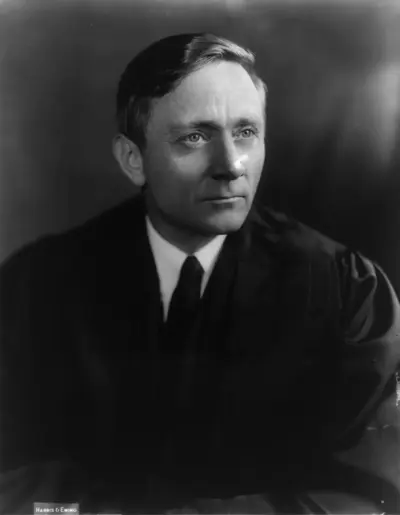
William Orville Douglas was an American jurist and politician who served as an associate justice of the Supreme Court of the United States. Nominated by President Franklin D. Roosevelt, Douglas was confirmed at the age of 40, one of the youngest justices appointed to the court. His term, lasting 36 years and 211 days (1939–75), is the longest in the history of the Supreme Court. In 1975, Time magazine called Douglas "the most doctrinaire and committed civil libertarian ever to sit on the court."
