Robert S. McElvaine Quotes
Our nation’s history can be seen as an enduring civil war over whether Big Government of Big Business is the primary enemy of the people.
Robert S. McElvaine, Historian, “Too Big to Tolerate”, The Washington Post, Setember 11, 2011
Sourced by: Eigen's Political and Historical Quotations


One important observation of this quotation is the pejorative language Mises used to describe “Union Bosses” as opposed to “Union Leaders.” There were indeed a few Union “Bosses” but most unions had popularly elected leaders. It is similar to the left wing critic who refers to Corporate Executives as “Greedy Monopolists.” A few are but most are not. Historically, in the last half of the 20th century and the beginning of the 21st, the conservatives tended to be much better at pejorative language and used it more frequently and uniformly than the liberals who tended to be better in the last part of the 19th century and the first half of the 20th century.


There is a very interesting parallel with the views and statements of FDR at the same time.


His last speech before his appointment to the court.


The Kimberly and Comstock lodes were natural deposits of copper and silver so close to the surface that it required very little work to remove the metal and sell the it.


She had done a monumental exposé of the Standard Oil Company illegal and immoral activities. The public was so aroused that many reforms were instituted and the Standard Oil Company Trust was broken up into many smaller companies. Tarbell was then, in the words of S. S. McClure, “the most famous woman in America.”

The President had decided to aggressively push for railroad regulation to end the rate rebate abuses that were used to support the monopolies like Standard Oil. In vintage Roosevelt tactics, he gave his first major speech on the subject in the setting and forum that would be most opposed to it. The Union League Club of Philadelphia in included the wealthiest men in the area where were most opposed to any Federal Regulation of anything. All the major railroad executives and stock owners and traders were also members. The President wanted to persuade the opponents to change their positions, and sometimes he did. He also was driven by his concept of sports and athletics so that the “opposition” should have “fair notice” for the contest ahead.

The “rebate agony” referred to a corrupt practice of the Railroads and the Large Monopolies. The railroads charged a very high rate for the transportation of important products like beef and oil. However, secretly they gave back a large percentage of the transportation rate charged to the trusts. They in turn could cut their prices and undersell all the smaller competitors who were paying “full freight” and could not afford to match the lower price. As soon as the smaller competitors were driven out of business in an area, the trust raised its rates even higher than they charged originally. The Railroad had made a small but reasonable profit on the freight of the trusts but they were guaranteed all their business. They also made huge profits on the higher rates that the small companies paid until those companies were driven out of business. Journalists like Ray Baker and Ida Tarbell had uncovered the rebate scheme which enabled the trusts to steal high amounts from the general public through unreasonably high prices. President Theodore Roosevelt was committed to try and regulate the railroads and not allow rebates but charge the same public rate to all with no rebates. Socialists like Sinclair, thought that this attempt would be hopeless—that the damage had already been done, and the trusts now had so much money that they could buy state legislatures and many in Congress to preserve their dominance.
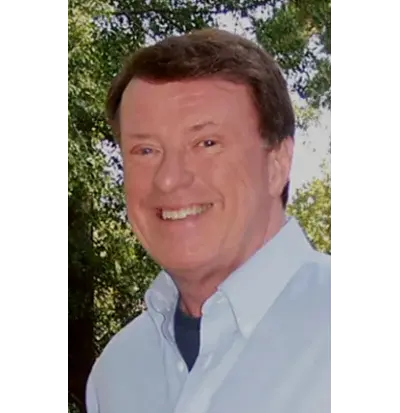
Robert S. McElvaine is Elizabeth Chisholm Professor of Arts and Letters and Chair of the Department of History at Millsaps College in Jackson, Mississippi, where he has taught for thirty-five years. He is the author of seven books and the editor of three.
