Albert J. Nock Quotes
Get up in one of our industrial centers today and say that two and two make four, and if there is any financial interest concerned in maintaining that two and two make five, the police will bash your head in.
Albert J. Nock, 1873–1945, Philosopher, educational theorist, social critic, Philosophical founder of the modern, Extreme Libertarian Conservative movement, “Free Speech and Plain Language”, The Atlantic Monthly, January 1936
Sourced by: Eigen's Political and Historical Quotations


By restricting or limiting the campaign contributions of corporations, Scalia observed, the government is in effect is muffing the voices of the entities which not only is a great source of information on the economy, but it represents and is a very large component of the American economy itself. The Citizen United case resolved that issue to obtain the views and information of the corporations, but in the views of many others the price society pays is very high—perhaps too high.

There were many British and American capitalists, like Lindbergh, who were great admirers of Hitler and Mussolini and supported the Fascists.


Saloth Sar Pol Pot. His view was that any small merchant or tradesman running a business was a capitalist, and all educated were enemies of the people. He moved entire populations out of the cities into the countryside where they would live as peasants or be murdered as about 20% of the entire population as. Therefore, in his warped view, the capitalists could no longer “control” Cambodia.


There is a very interesting parallel with the views and statements of FDR at the same time.

While Ray was very sympathetic towards the strike, his father’s attitude was typical of that of business men across the nation. A picket line or demonstration was a “mob” and mobs should be broken up before they do physical damage to people or property. “Grape” and “canister” were types of ammunition for cannon that was used against personnel in war. One shell could kill 20-30 men in a crowd.


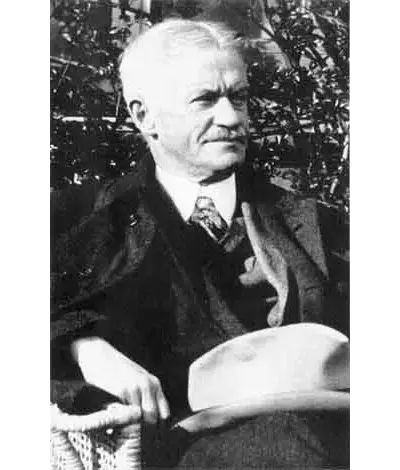
Albert Jay Nock was an American libertarian author, editor first of The Freeman and then The Nation, educational theorist, Georgist, and social critic of the early and middle 20th century. He was an outspoken opponent of the New Deal, and served as a fundamental inspiration for the modern libertarian and conservative movements, cited as an influence by William F. Buckley Jr. He was one of the first Americans to self-identify as "libertarian". His best-known books are Memoirs of a Superfluous Man and Our Enemy, the State.
