Wole Soyinka Quotes
Books and all forms of writing are terror to those who wish to suppress the truth.
Soyinka, Wole. The Man Died: Prison Notes of Wole Soyinka. Rex Collings, 1972.


First Astronomy, then Geology, proved that the Creation that was described in the Bible was not literally correct. To religious fundamentalists who believe that every word of the Bible is the word of God or the word of those inspired by God, the only possibility of conclusion is that the science is wrong. To the extent that undermining the word of God is not acceptable to the fundamentalists, they have used every power—including the criminal law power of the state to stop the blasphemy and discredit the scientist. In 1856, there was a much larger proportion of fundamentalists in the Western World than there is today. By 2012, the vast majority of these same populations have rejected Christian Biblical Fundamentalism, and no longer attack science for its affect on religion. The minority of fundamentalists, however, are vehement in their opposition to science.


Licensing of the press is


Spinoza’s ideas were considered so radical and dangerous that he was the only man in history who was excommunicated by the Catholics, the Jews and the Muslims. However, we see in Spinoza the observations and foundations of what would become American and then international views of human rights.

As hard as it is for us to imagine today, while her husband was President of the United States, the First Lady wrote a nationally syndicated newspaper column every single day with politics frequently the subject. While she usually agreed with the President, there were occasions where they seemed to not see things exactly the same. She tended to be more liberal than he. However, there were those who believed that when she criticized politicians, it was with FDR’s knowledge and blessing and she sometimes did his “dirty work.” Eleanor Roosevelt was one of the most influential people in the country—certainly more-so than any First Lady before and since.

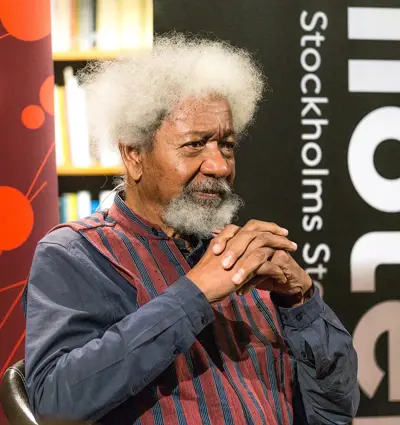
Akinwande Oluwole Babatunde Soyinka, known as Wole Soyinka (pronounced [wɔlé ʃójĩnká]), is a Nigerian playwright, novelist, poet, and essayist in the English language. He was awarded the 1986 Nobel Prize in Literature, the first sub-Saharan African to be honoured in that category. Soyinka was born into a Yoruba family in Abeokuta. In 1954, he attended Government College in Ibadan, and subsequently University College Ibadan and the University of Leeds in England. After studying in Nigeria and the UK, he worked with the Royal Court Theatre in London. He went on to write plays that were produced in both countries, in theatres and on radio. He took an active role in Nigeria's political history and its struggle for independence from Great Britain. In 1965, he seized the Western Nigeria Broadcasting Service studio and broadcast a demand for the cancellation of the Western Nigeria Regional Elections. In 1967, during the Nigerian Civil War, he was arrested by the federal government of General Yakubu Gowon and put in solitary confinement for two years.
