Harriet Martineau Quotes
It is hard to tell which is worse; the wide diffusion of things that are not true, or the suppression of things that are true.
Martineau, Harriet. Society in America. Vol. 1, Saunders and Otley, 1837.


McClellan after he left his White House Post, reflected on the experience, and wrote a book that described the George W. Bush White House practices many of which he was involved with.

Wikileaks had just released 400,000 classified American documents relating to the Iraq War. Many accused him and Wikileaks of endangering the lives of not only soldiers, but Iraq civilians who might be identified as cooperating with the coalition forces by the released documents. The heart of the problem is that governments tend to use classification to hide embarrassing facts or policies that might be controversial as well as to protect legitimate national security secrets and sources and methods of information. The majority of the 400,000 leaked documents, when examined, were clearly not protecting any legitimate people or secrets but just staved off criticism or embarrassment; in many cases, there was no value to the contents and the maw of the censorship and classification process was applied indiscriminately to many documents. A much better argument than Assange made, can be gleaned from the vast number of WWII documents that America, England, France, Russia and others still keep secret, when the people who might have been protected have already died and the methods are long since obsolete.


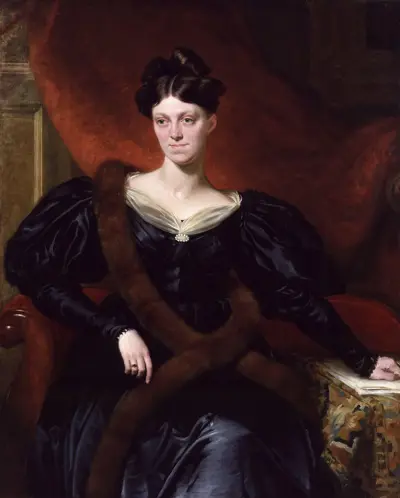
Harriet Martineau was an English social theorist and Whig writer often seen as the first female sociologist. She wrote many books and essays from a sociological, holistic, religious, domestic and feminine perspective, translated works by Auguste Comte, and earned enough to support herself by writing, a rare feat for a woman of her period. The young Princess Victoria enjoyed reading her and invited her to her coronation in 1838. Martineau said of her approach, "One must focus on all [society's] aspects, including key political, religious, and social institutions." She believed thorough analysis was needed to understand women's status under men. The novelist Margaret Oliphant said "as a born lecturer and politician... less distinctively affected by her sex than perhaps any other, male or female, of her generation."
