Harriet Martineau Quotes
Of all newspaper presses, I never heard anyone deny that the American is the worst.... [N]othing is easier than to make the people know only one side of a question; few things are easier than to keep them altogether from the knowledge of any particular affair; and, worse than all, on them [the American people] may easily be practiced the discovery that lies may work their intended effect, before the truth can overtake them. It is hard to tell which is worse; the wide diffusion of things that are not true or the suppression of things that are.
Harriet Martineau, 1802-1876, British Economist & Reformer, Society in America, 1837
Sourced by: Eigen's Political and Historical Quotations


The queen was a lot more sophisticated about the newspapers than politicians in the 21st century.


Even as late as the 1970s most media organizations did not feel any inhibition about having a spokesperson for a political movement or candidate comment about statements that were clearly untrue. The constant political criticism of the media produced this change and no matter how absurd or false a political statement is, most media will have a spokesperson for the lie appear on the program to repeat the lie. Both political parties are thereby encouraged to exaggerate or even lie as they will never by exposed by trusted journalists and can reduce all falsehoods to a “he says, she says.”


Saudi Arabian Newspaper. In March of 2002, a Saudi Arabian Professor at King Faisal University wrote an article for a Saudi newspaper that was a virulent slander of the Jews and their holy book. See {593096}. The article was published under full Saudi Arabian censorship which means that the government OK’d the contents. The editor claimed that he had been away when the offending articles had been published. The lie that Jews use the blood of non-Jews to bake their holy bread has been a staple of anti-Semitic propaganda through the centuries.


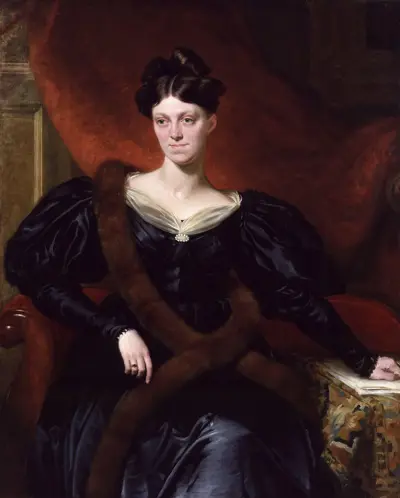
Harriet Martineau was an English social theorist and Whig writer often seen as the first female sociologist. She wrote many books and essays from a sociological, holistic, religious, domestic and feminine perspective, translated works by Auguste Comte, and earned enough to support herself by writing, a rare feat for a woman of her period. The young Princess Victoria enjoyed reading her and invited her to her coronation in 1838. Martineau said of her approach, "One must focus on all [society's] aspects, including key political, religious, and social institutions." She believed thorough analysis was needed to understand women's status under men. The novelist Margaret Oliphant said "as a born lecturer and politician... less distinctively affected by her sex than perhaps any other, male or female, of her generation."
