William Cullen Bryant Quotes
The press ... is but the servant of human intellect and its ministry is for good or evil, according to the character of those who direct it. The press is a mill that grinds all that is put into its hopper. Fill the hopper with poisoned grain and it will grind it to meal, but there is death in the bread.
William Cullen Bryant, 1794-1878, Poet & Editor, The Newspaper Press
Sourced by: Eigen's Political and Historical Quotations


The queen was a lot more sophisticated about the newspapers than politicians in the 21st century.


Samuel Langhorne Clemens, 1835-1910. Grant was the victim of more journalistic errors than most politicians as a number of his appointees turned out to abuse their position for their own gain. Often, Democratic leaning newspapers would claim the Grant was aware of the corruption, sharing in it or both, When there was later proof of Grant’s non involvement, most newspapers would never publish a retraction of correction.


Justice Blackmun was widely quoted by the press for criticizing his Supreme Court colleagues in a St. Louis speech. The justice believed that he had been misquoted and also quoted out of context. He wrote a letter to his fellow justices.


In 1948 in the midst of the Red Scare the HUAC and its Senate counterpart had started to hound a former Assistant Secretary of State, Lawrence Duggan. Typical of the times, those who disagreed with Duggan’s political views anonymously leaked material to the press alleging that Duggan might have been a spy. The press had a feeding frenzy and Dugan committed suicide in the midst of the pressure. Most in Congress paused to contemplate the consequence of what was occurring. Even Richard M. Nixon regretted the “misunderstandings.” Dugan’s father, however, an old acquaintance of Edward R. Murrow, the then dean of American broadcasters, however primarily blamed the press for printing all the unsubstantiated rumor and innuendo.


The evils of the time were even worse than in modern times. Most newspapers, journals, and periodicals were in 1835 actually owned and operated by political parties or people totally identified with political parties. In modern times, there are publications and blogs which are controlled by political forces, but most are not.

Those who dumb down the news, trivialize the news with in-studio shouting matches passing for debate
It is expensive to pay journalists to investigate and record the news. It is very inexpensive to put two political protagonists at a table with a moderator, and allow them to shout at each other for the duration of the program.

Vladimir Lenin. Lenin was echoing criticisms that were made the world over and even by some in the United States. However, his solution to have the press controlled by the ruling party just changed the cast of characters who were propagandizing and distorting the truth. Lenin was not able to offer a better solution nor were others. However, with enough affluence the capitalist society produced enough different publishers all competing that one did not dominate public opinion. With technology of TV and the Internet, the bar to entry is so small that almost anyone can be a publisher and find an interested market. In a way technology has solved much of the problem for capitalistic and totalitarian societies alike. In the latter, even censorship is not easy or feasible on a large scale.


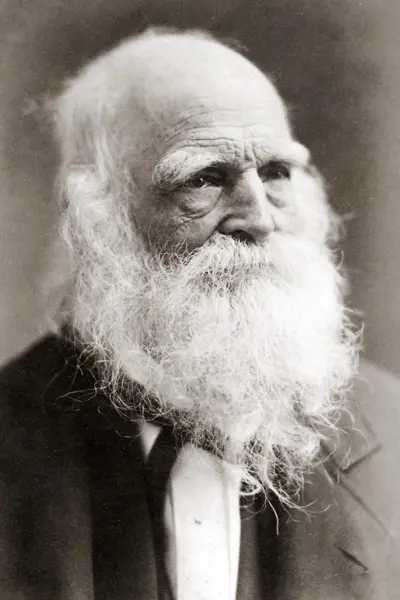
William Cullen Bryant was an American romantic poet, journalist, and long-time editor of the New York Evening Post. Born in Massachusetts, he started his career as a lawyer but showed an interest in poetry early in his life. He soon relocated to New York and took up work as an editor at various newspapers. He became one of the most significant poets in early literary America and has been grouped among the fireside poets for his accessible, popular poetry.
