Samuel Johnson Quotes
Among the calamities of war, may he justly numbered the diminution of the love of truth, by the falsehoods which interest dictates, and credulity encourages.
Samuel Johnson, 1709-1784, English Writer & Lexicographer, The Idler, November 11, 1758
Sourced by: Eigen's Political and Historical Quotations

Theodore Roosevelt was the Presidential nominee. See {634097} and {585962}--Samuel Johnson, for a 1758 version of this idea.

The quotation was given by Defense Secretary Donald Rumsfeld just prior to the war with Iraq, 2003.


George was referring to the brutal realities of war (during the First World War).

Wikileaks had just released 400,000 classified American documents relating to the Iraq War. Many accused him and Wikileaks of endangering the lives of not only soldiers, but Iraq civilians who might be identified as cooperating with the coalition forces by the released documents. The heart of the problem is that governments tend to use classification to hide embarrassing facts or policies that might be controversial as well as to protect legitimate national security secrets and sources and methods of information. The majority of the 400,000 leaked documents, when examined, were clearly not protecting any legitimate people or secrets but just staved off criticism or embarrassment; in many cases, there was no value to the contents and the maw of the censorship and classification process was applied indiscriminately to many documents. A much better argument than Assange made, can be gleaned from the vast number of WWII documents that America, England, France, Russia and others still keep secret, when the people who might have been protected have already died and the methods are long since obsolete.


This has been true in just about every conflict. In WWII however, there were a highly disproportionate ration of atrocities with those of the axis forces dwarfing those of the U. S. and its allies. Further, after the war, those allied atrocities that did take place were published. In addition, one basic difference is in the policies of the fighting forces and their governments as opposed to individual actions by soldiers. In WWII, the allied atrocities were of the latter type, but the axis atrocities involved both.


Every military establishment has secrets that they should maintain and are not always forthcoming with facts d explanations. However, the Pentagon is so large with so many layers that there are subgroups and vested interests, prevaricate and lie, even to their own superiors. No one knows how prevalent this is, but there have be a number of major incidents where the were lies and cover-ups—usually to prevent public embarrassment to some element of the military industrial complex.

Most CIA Directors have not had this extreme attitude, but because Casey did, journalists, members of Congress, other government officials and even Presidents have often distrusted the CIA and their personnel more than was necessarily warranted.


The queen was a lot more sophisticated about the newspapers than politicians in the 21st century.


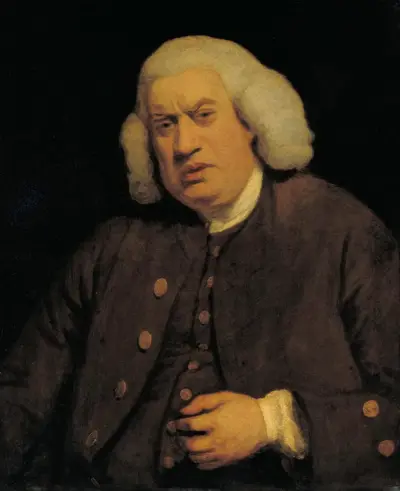
- Born: September 18, 1709
- Died: December 13, 1784
- Nationality: English
- Profession: Poet, Playwright, Essayist, Moralist, Literary Critic, Biographer, Editor, Lexicographer
Samuel Johnson, often referred to as Dr Johnson, was an English writer who made lasting contributions to English literature as a poet, playwright, essayist, moralist, literary critic, biographer, editor, and lexicographer. Religiously, he was a devout Anglican, and politically a committed Tory. The Oxford Dictionary of National Biography describes Johnson as "arguably the most distinguished man of letters in English history". He is the subject of James Boswell's The Life of Samuel Johnson, described by Walter Jackson Bate as "the most famous single work of biographical art in the whole of literature".
