Pearl S. Buck Quotes
Man was lost if he went to a usurer, for the interest ran faster than a tiger upon him.
Buck, Pearl S. The Good Earth. John Day Company, 1931, p. 121.


Those who devour interest will not stand except as stands one whom Satan has driven mad by his touch
Interest is forbidden in all transaction, both business and personal.

Sherman, at the height of the California Gold Rush, took a private assignment for Moffett & Company, establishing and running an assaying, banking and minting company in San Francisco
Such an interest rate was not considered high, much less usurious.

The bill which passed required people who went into bankruptcy to continue to pay for credit card obligations incurred before the bankruptcy except if they are very rich and have bought very expensive homes in the five states which offer this shelter.


Essentially, the Council voted to close all the banks of the day and get rid of all the bankers. Without banking economic development of Christian (Catholic) Europe stagnated and did not thrive until the Borgia’s used their banking prowess to actually attain the Papacy. Ironically, Christians, Jews and Muslims all had banned banking—usury—the charging of interest for borrowed money—as a serious sin. To this day there are orthodox fundamentalists of all three religions who decry modern banking, but the majority of Christians and Jews no longer have any problem with banking, and while the Muslims generally still decry it as a sin, the wealthy Muslims have come up with various fig leaves where they pretend that banking us not usury, and in the modern world, although they are castigated by a mullah or two, the essence of capitalism goes on even in Muslim countries.
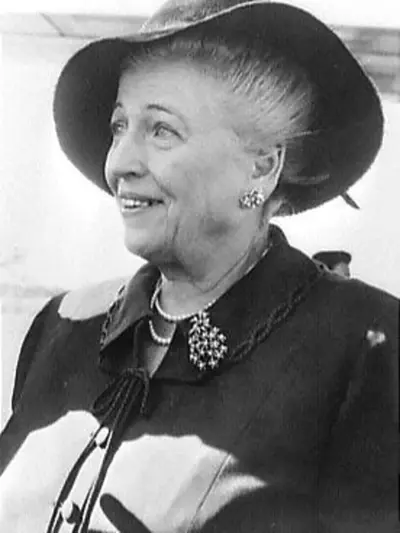
Pearl Sydenstricker Buck also known by her Chinese name Sai Zhenzhu (Chinese: 赛珍珠) was an American writer and novelist. As the daughter of missionaries, Buck spent most of her life before 1934 in Zhenjiang, China. Her novel The Good Earth was the best-selling fiction book in the United States in 1931 and 1932 and won the Pulitzer Prize in 1932. In 1938, she was awarded the Nobel Prize in Literature "for her rich and truly epic descriptions of peasant life in China and for her biographical masterpieces". She was the first American woman to win the Nobel Prize in Literature.
