Leonard Henry Courtney Quotes
What a jolly awakening there will be some few years hence, when the inevitable argument of experience will show us a nation contradicting itself through the voices of its chosen representatives!
Leonard Henry Courtney, 1832-1918, English Member of Parliament, President of the Royal Statistical Society, “To My Fellow-Disciples at Saratoga Springs”, The National Review, London, 1895
Sourced by: Eigen's Political and Historical Quotations


This is a formal codification of the position that was made by the great orator Edmund Burke: {194922}.


This was his version of the governing body of a republican commonwealth. His assumption was that the ablest men would be the nobility, the educated and religious (Catholic) elite.


Chief legal officer of a Dutch town. He wanted to have a plebiscite in each town on major issues before the assembly so as to instruct the representative as to how to vote. The graphic is a painting of Adriaan van Zeebergh and his board of the Teylers Stichting.


the power a ruler or a ruling class


He made this statement to his party colleagues and they pleaded with him not to issue it as a public statement and he agreed.

See {639757} for more of his view on the Dutch revolutionary spirit that might infect France. It did a few years later.

There were many in England and America who thought that political parties or “factions” as the Americans called them were inimical to republican government. Smyth disagreed and thought parties necessary for freedom and democracy. Turkey at the time was an Islamic Empire that while in decline still controlled large parts of Europe and most of North Africa. However, the Sultan had absolute control over both “church and state”. He was like the Pope and the Holy Roman Emperor in one person, There was no freedom of thought or speech.

At the time English democracy was still suspect especially among the aristocracy.
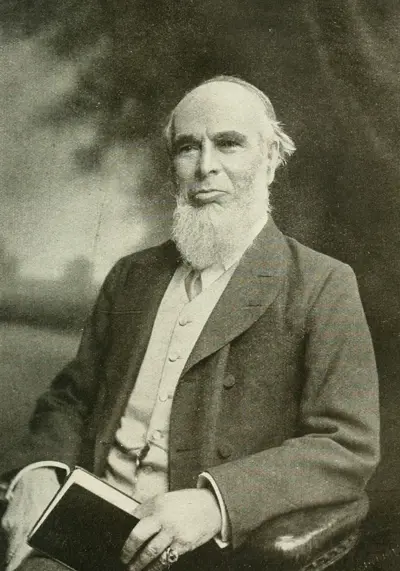
Leonard Henry Courtney, 1st Baron Courtney of Penwith PC was a radical British politician, and an academic, who became famous after being advocate of proportional representation in Parliament and acting as an opponent of imperialism and militarism.
