Pierre-Joseph Proudhon Quotes
It is necessary to have lived in this insulator which is called the national assembly, in order to perceive how the men who are the most completely ignorant of the state of the country are almost always the ones who represent it.
Pierre Joseph Proudhon, 1809-1865, French Journalist & Socialist Politician, Member of the Constituent Assembly, Father of Anarchism Confessions of a Revolutionary, 1849
Sourced by: Eigen's Political and Historical Quotations


In Dolgoff’s era, his argument was that the political parties were so powerful that it was they who controlled who held public office, not the voters. And the parties were controlled by a few party leaders. However, when the system was reformed in the latter part of the 20th century, the individual incumbent member of Congress in America was so hard to dislodge due to the role of money and the advantage of incumbency, that the class of professional politicians was still very powerful. Reform had reduced the control of political parties but not politicians.

The Congress at the time was one of the worst in American history, accomplishing little more than nothing, mired in gridlock and ideological hyperpartisanship, with little concern for the nation as a whole. Other critics observe that it is the voting public that elected and re-elected the Congress and therefore must share the responsibility.


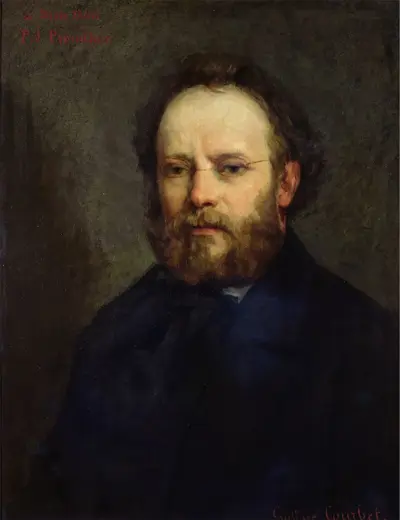
Pierre-Joseph Proudhon was a French socialist, politician, philosopher, economist and the founder of mutualist philosophy. He was the first person to declare himself an anarchist, using that term and is widely regarded as one of anarchism's most influential theorists. Proudhon is considered by many to be the "father of anarchism". Proudhon became a member of the French Parliament after the Revolution of 1848, whereafter he referred to himself as a federalist. Proudhon described the liberty he pursued as "the synthesis of communism and property". Some consider his mutualism to be part of individualist anarchism while others regard it to be part of social anarchism.
