Edmund Burke Quotes
The virtue, spirit, and essence of a House of Commons consists in its being the express image of the feelings of the nation. It was not instituted to be a control upon the people, as of late it has been taught
Edmund Burke, 1729-1797, Irish Orator & Member of the British Parliament, Thoughts on the Cause of the Present Discontents, 1770
Sourced by: Eigen's Political and Historical Quotations

At the time the power and prestige of Congress relative to the Presidency , was much greater than it is today. It was McKinley’s successor, Theodore Roosevelt, who began a 20th century trend which led to a reversal of the relationship between the Executive Branch and the Legislative.


Chief legal officer of a Dutch town. He wanted to have a plebiscite in each town on major issues before the assembly so as to instruct the representative as to how to vote. The graphic is a painting of Adriaan van Zeebergh and his board of the Teylers Stichting.


This is a formal codification of the position that was made by the great orator Edmund Burke: {194922}.


During the early days of the American independence movement, many were preoccupied with the philosophical and theological issues of whether the Almighty approved of monarchy or not. Parker urged concentration on assuring independence first.

Despite his warning---and that of others—all that they could get agreement upon had each of these three weaknesses. After winning the American Revolution, the new country found the Articles of Confederation and the Continental Congress completely inadequate and finally in 1787 there was a Constitutional Convention held in secret in Philadelphia to overcome the weaknesses of the existing structure of which the warnings of Rush were three of the problems that had to be fixed.


In the EU most of the government power is dominated by appointed elites and not elected representatives.


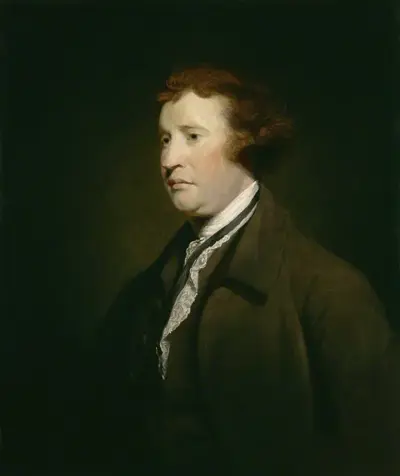
Edmund Burke was an Irish statesman, economist, and philosopher. Born in Dublin, Burke served as a member of parliament (MP) between 1766 and 1794 in the House of Commons of Great Britain with the Whig Party after moving to London in 1750.
