Millard Fillmore Quotes
Upon you, fellow-citizens, as the representatives of the States and the people, is wisely devolved the legislative power.
Fillmore, Millard. "First Annual Message." 2 Dec. 1850. A Compilation of the Messages and Papers of the Presidents, 1789-1897, edited by James D. Richardson, vol. 5, Government Printing Office, 1897, p. 93.


The Tennessee legislature nominated Jackson for President.

At the time the power and prestige of Congress relative to the Presidency , was much greater than it is today. It was McKinley’s successor, Theodore Roosevelt, who began a 20th century trend which led to a reversal of the relationship between the Executive Branch and the Legislative.


Two years later with bipartisan support Speaker Joseph Cannon was stripped of his party and the Rules Committee was created.


Talking to young elementary and junior high school students.


In the EU most of the government power is dominated by appointed elites and not elected representatives.


In the English system the checks and balances of the American system are not present. Historically in England the Monarch and the Parliament acted as checks upon each other. With a Constitutional Monarch there is no institutional check on Parliament. The checks are their restraint--respect for precedent--and the voters. The Prime Minister is a member of Parliament and has no powers other than what Parliament gives him/her. The courts in England are under Parliament and the upper house, the House of Lords is the equivalent of the highest court—but it may always be overruled by the parliament itself.

The conservative Senator was very distrustful of the constitutional amendment process itself after a both prohibition and women's suffrage amendments had passed. Wadsworth and his supporters feared Constitutional amendments passed by Congress and the State legislatures without any direct approval of the people.

Samuel Langhorne Clemens, 1835-1910

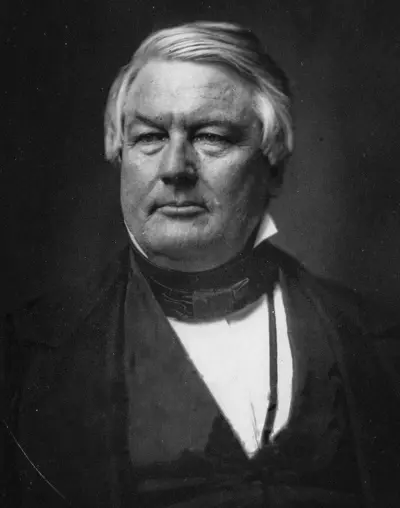
Millard Fillmore was the 13th president of the United States, serving from 1850 to 1853, the last to be a member of the Whig Party while in the White House. A former member of the U.S. House of Representatives from Upstate New York, Fillmore was elected as the 12th U.S. Vice President in 1848, and succeeded to the presidency in July 1850 upon the death of U.S. President Zachary Taylor. Fillmore was instrumental in the passing of the Compromise of 1850, a bargain that led to a brief truce in the battle over the expansion of slavery. He failed to win the Whig nomination for president in 1852 but gained the endorsement of the nativist Know Nothing Party four years later and finished third in the 1856 presidential election.
