Andrew Jackson Quotes
As the legislature of my state has thought proper to bring my name forward without consulting me, I mean to be silent, and let the people do as seemeth unto them.
The Tennessee legislature nominated Jackson for President.
Andrew Jackson, 1767-1845, 7th President of the United States (Democrat, TN), Letter to A. J. Donelson, August 6, 1822
Sourced by: Eigen's Political and Historical Quotations


In the Watergate crisis H. R. Haldeman had asked for a Presidential pardon. A discussion of the request was held by some White House staff members:


Coolidge had no involvement in politics after his Presidency. He was never consulted by his successor and never resented that fact.


Chief legal officer of a Dutch town. He wanted to have a plebiscite in each town on major issues before the assembly so as to instruct the representative as to how to vote. The graphic is a painting of Adriaan van Zeebergh and his board of the Teylers Stichting.


Originally it was published in Boston under the name “A Columbian Patriot.” The “principles to which she referred were the principles set out in our Constitution of 1787.


Samuel Langhorne Clemens, 1835-1910

At the time the power and prestige of Congress relative to the Presidency , was much greater than it is today. It was McKinley’s successor, Theodore Roosevelt, who began a 20th century trend which led to a reversal of the relationship between the Executive Branch and the Legislative.

For Turgot, see below

The manifesto was designed to stop the practice of one country annexing part of another either by conquest or by purchase from the previous dominant power. Nations would trade and sell colonies or provinces to each other without any thought whatsoever to the wishes of the populations of those territories.
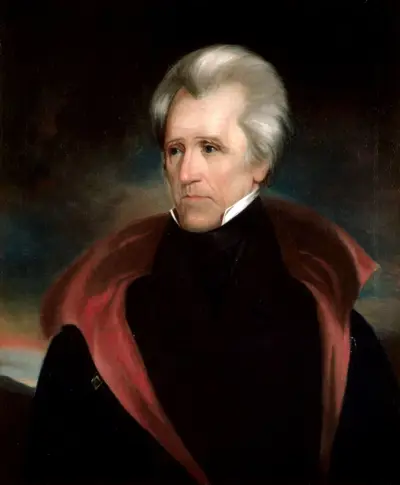
Andrew Jackson was an American lawyer, soldier, and statesman who served as the seventh president of the United States from 1829 to 1837. Before being elected to the presidency, Jackson gained fame as a general in the United States Army and served in both houses of the U.S. Congress. An expansionist president, Jackson sought to advance the rights of the "common man" against a "corrupt aristocracy" and to preserve the Union.
