Edmund Burke Quotes
It is undoubtedly the business of ministers very much to consult the inclinations of the people, but they ought to take great care that they do not receive that inclination from the few persons who may happen to approach them.
Edmund Burke, 1729-1797, Irish Orator & Member of the British Parliament, Letters on a Regicide Peace, 1796-1787
Sourced by: Eigen's Political and Historical Quotations

In the Watergate crisis H. R. Haldeman had asked for a Presidential pardon. A discussion of the request was held by some White House staff members:


Declaration of Humanity. Printed in Japanese Newspapers. Contrast this with the previous Japanese political leadership tradition as {43746}


the power a ruler or a ruling class


Meiji the Great. “Public Opinion” had the same meaning for the Japanese of this time as modern Western democracies perceive it with one exception. The public did not include all; it included only landlords— who owned land and had peasants on it. However, even asking them was an incredible step forward. The Emperor even sent formal written surveys to the landlords and in that sense, Japanese methodology of ascertaining public opinion was far ahead of the West. These reforms were opposed by the nobility and later the military, and by the 1930s there was no semblance of democracy left in Japan.


His faction won on the House and lost with respect to the Senate.


_0_thumbnail_47x47.jpg)
The CHP is the oldest political party in Turkey. The great Turkish refomer, Ataturk, the first President of Turkey, represented this party. He modernized and cleaned up what was a backward and corrupt country and although there was little bloodshed in the massive cultural transformation, it was very much a top down revolution where the people, like most people, did not welcome radical changes to their society and way of life. Ataturk gave women the vote, imposed compulsory education for both genders, established a parliamentary system, banned traditional garb, and even forced a language change, shifting from the Arabic alphabet to the European Latin Alphabet. Most opposed however was his complete separation of church and state and the transformation of Turkey into a sectarian nation from what had been a theological dictatorship where the Sultan was the absolute ruler of the state and of the Muslim religion.


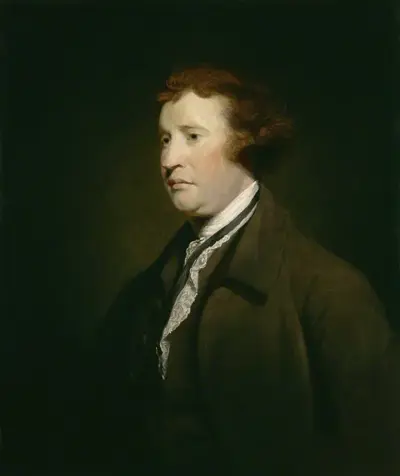
Edmund Burke was an Irish statesman, economist, and philosopher. Born in Dublin, Burke served as a member of parliament (MP) between 1766 and 1794 in the House of Commons of Great Britain with the Whig Party after moving to London in 1750.
