John Adams Quotes
If there is one certain truth to be collected from the history of all ages, it is this: that the people's rights and liberties, and the democratic mixture in a constitution, can never be preserved without a strong executive, or, in other words without separating the executive power from the legislature.
For Turgot, see below
John Adams, 1735-1826, 2nd President of the United States (Federalist, MA), Defence of the Constitutions of Government of the United States of America against the Attack of Mr. Turgot, 1787
Sourced by: Eigen's Political and Historical Quotations


The drafters of the Constitution were well aware of this view of Montesquieu’s which was one of the main bases of separation of powers and checks and balances in America.


The United States government had for many years deposited all its funds in a single private bank, the Bank of the United States. President Jackson, without congressional authorization, ordered the Federal deposits to be distributed among state banks instead. The Senate passed a resolution demanding a copy of the "paper" he had read to the cabinet ordering the change of practice:


Though not very dramatic or succinct, this is a very important quotation in American History. The original drafters of the Constitution concentrated on limiting the powers of the executive—the role of the King. But the Congress had no limits placed on them. In Britain, to this day, the Parliament can do whatever they wish as there is no restraint on them other than their prudence and reasonableness. Madison used the example of the Alien and Sedition Acts—huge infringements on the rights of Americans—to show why the legislative branch must also be more restrained and limited. And that was the logic behind adding the Bill of Rights to our Constitutions.


Jefferson and many others thought the original drafting of the Constitution was deficient in not explicitly protecting rights from the government. See {586024}. When it came time for ratification, it was clear that ratification would not take place unless that was remedied and the Bill of Rights made the ratification possible by satisfying many critics of whom Jefferson was but one. Note that the protection sought was from the President and the Congress.
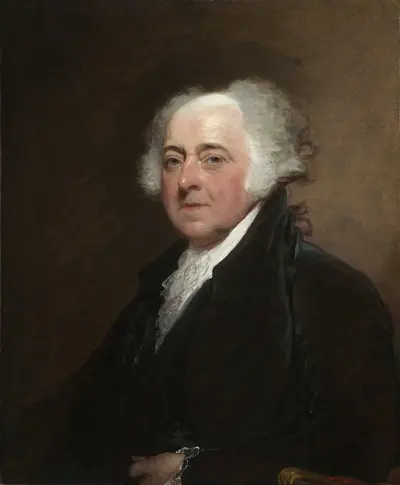
John Adams Jr. was an American statesman, attorney, diplomat, writer, and Founding Father who served as the second president of the United States from 1797 to 1801. Before his presidency, he was a leader of the American Revolution that achieved independence from Great Britain, and he served as the first vice president of the United States. Adams was a dedicated diarist and regularly corresponded with many important figures in early American history, including his wife and adviser Abigail Adams and Thomas Jefferson.
