George III Quotes
We regret any country falling off from the cause of withstanding the principles and conduct of those who tyrannize France [the French revolutionists]. The little vigor shown by the Dutch from the beginning of the contest makes their secession of but little real loss.
William V, Prince of Orange, was a very hapless monarch of Holland who was ineffective in dealing with revolutionary discontent despite help and support of England. The King of England was resigned to Holland becoming, like France, a Republic. The English statesmen and diplomats, while aiding William, were also secretly providing money and other assistance to the Patriot rebels, to ensure good relations with the Dutch republican leaders.
George III, 1738-1820, King of England & Ireland, King of Hanover, Statement to Lord Grenville, 1794
Sourced by: Eigen's Political and Historical Quotations


The French Revolution was out of control and terribly bloody. Most Americans and even English who supported the principles and reasons for the French revolution ceased their support because of the Reign of Terror. Jefferson, however, saw a link between France and American democracy and was reluctant to end support.


While France was in the midst of a violent revolution, the American debate was on the power and prestige of the Presidency. Then Vice President John Adams was a proponent of a strong executive. Most others were not.


the Dutch monarchy supported by England The French fear of course was that the revolutionary fervor spreading to the bourgeois could easily spread to France, and that is exactly what happened 4 years later. See {639769} for more of his view on the Dutch revolutionary spirit that might infect France.
See {639757} for more of his view on the Dutch revolutionary spirit that might infect France. It did a few years later.


The Menshevik Party was the Communist Opposition to the Bolshevik Party. Unlike the Mensheviks, the Bolsheviks seized as much power as they could and then denied anyone else a share.

Adams' interesting distinction was later taken much further by many communist countries in their treatment of "enemies" of "peoples' governments."


The non-communist forces of China were always struggling with each other for power. Attempts by non-communist reformers were defeated by autocrats, warlords, major landlords, and various religions organizations and denominations which were all fighting each other.

There was an attempt by some Libyans to attack a Libyan student at an American University who was an outspoken critic of the Qaddafi regime.

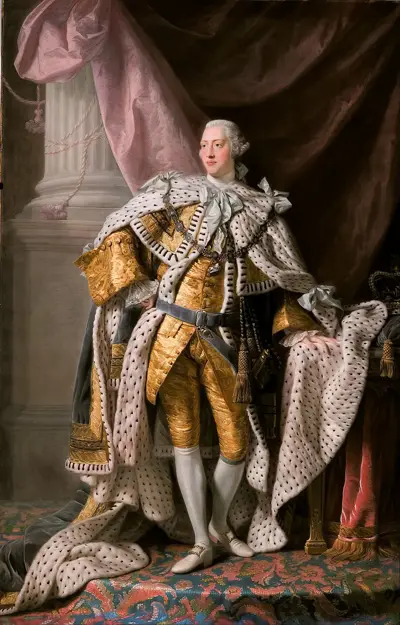
George III was King of Great Britain and Ireland from 25 October 1760 until the union of the two kingdoms on 1 January 1801, after which he was King of the United Kingdom of Great Britain and Ireland until his death in 1820. He was concurrently Duke and Prince-elector of Brunswick-Lüneburg ("Hanover") in the Holy Roman Empire before becoming King of Hanover on 12 October 1814. He was a monarch of the House of Hanover, but unlike his two predecessors, he was born in Great Britain, spoke English as his first language, and never visited Hanover.
