Muammar Qaddafi Quotes
There are revolutionary committees that practice revolutionary violence, and anyone who opposes the will of the people will have to be chased. Anyone who is opposed to the will of the people becomes a foe of the people. The duty of the revolutionary committee is to practice revolutionary violence against the enemies of the revolution.
There was an attempt by some Libyans to attack a Libyan student at an American University who was an outspoken critic of the Qaddafi regime.
Muammar Qaddafi, Chief of State, Libya, Interview, Time / CNN, June 8, 1981
Sourced by: Eigen's Political and Historical Quotations


Lev Davidovich Bronstein. This is the intellectual origin of the concept of the single party revolutionary state.


Rival to Mao. This quotation is historically important because it shows how intensively the Chinese Communists concentrated on organizing the fringe and unpopular groups of society to the point where the struggle was between Chiang Kai-shek’s Nationalists and everybody else. The Chinese Communist coalition included many who had not idea of what communism was but knew that Chiang Kai-shek and the Nationalists were not very good for them or the people they knew.

Germany, after its defeat in WWI was going through massive demonstrations and strikes. The government kept issuing bulletins that “Order Prevails” and the like. Luxemburg’s rhetoric and writing was so damaging to the government that they had her assassinated shortly after this statement.


He was elected to Parliament while in jail and never took his seat as he died of a hunger strike in jail.


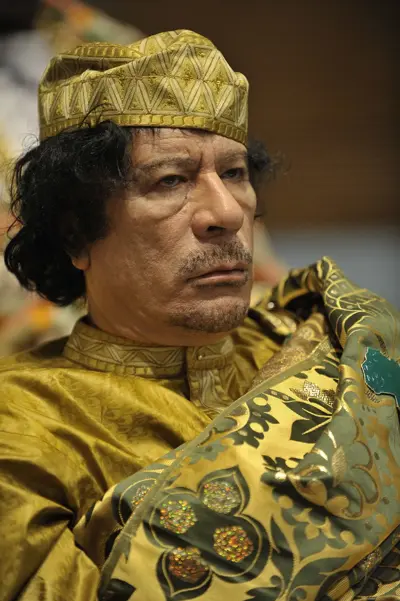
Muammar Muhammad Abu Minyar al-Gaddafi, commonly known as Colonel Gaddafi, was a Libyan revolutionary, dictator, politician and political theorist. He governed Libya as Revolutionary Chairman of the Libyan Arab Republic from 1969 to 1977 and then as the "Brotherly Leader" of the Great Socialist People's Libyan Arab Jamahiriya from 1977 to 2011. He was initially ideologically committed to Arab nationalism and Arab socialism but later ruled according to his own Third International Theory.
