Wang Ming Quotes
We communist party members should infiltrate among the bandits....we can organize them into the struggle of revolution.
Rival to Mao. This quotation is historically important because it shows how intensively the Chinese Communists concentrated on organizing the fringe and unpopular groups of society to the point where the struggle was between Chiang Kai-shek’s Nationalists and everybody else. The Chinese Communist coalition included many who had not idea of what communism was but knew that Chiang Kai-shek and the Nationalists were not very good for them or the people they knew.
Wang Ming, 1904–1974, Chinese Communist Leader, 華夏歷史:命運多舛的時代:中華民國(大陸時期) (九)
Sourced by: Eigen's Political and Historical Quotations

The Menshevik Party was the Communist Opposition to the Bolshevik Party. Unlike the Mensheviks, the Bolsheviks seized as much power as they could and then denied anyone else a share.


The non-communist forces of China were always struggling with each other for power. Attempts by non-communist reformers were defeated by autocrats, warlords, major landlords, and various religions organizations and denominations which were all fighting each other.

Note that he proudly describes himself as a Marxist-Leninist, but distinguishes that from Communism—especially Russian Style communism.


There was an attempt by some Libyans to attack a Libyan student at an American University who was an outspoken critic of the Qaddafi regime.


So often in America, citizens and government officials have made alliances or joined organizations under the theory that “the enemy of my enemy must be my friend.” It has almost always been a mistake ranging from joining the Communist Party in the 1930s to supporting the dictators or the Middle East, Asia, and South America. In the 1930s Fascism was growing and already on the march and neither America nor England—the leading democracies were not doing anything to combat the threat. America was emerging from the Great Depression, had a string Isolationist movement, and a small but influential group of Fascists and Hitler enthusiasts. Also, no one outside of Russia knew about the Stalin atrocities.

Durruti’s and other Republican columns were advancing on Saragossa on the Aragon front to free it from the Fascists. Durruti’s army was made up of idealist libertarians and anarchists who also didn’t much like straight communists because they would restrict individual freedom. The regular communist army was more conservative and wanted to coordinate and attack and wait for planning and more coordination between the columns. The libertarians pushed ahead with the others following and they took Saragossa

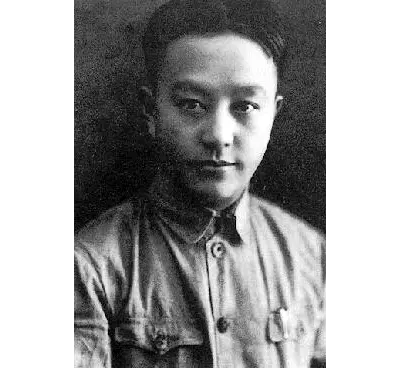
Wang Ming was a senior leader of the early Communist Party of China (CPC) and the mastermind of the famous 28 Bolsheviks group. Wang was also a major political rival of Mao Zedong during the 1930s, opposing what he saw as Mao's nationalist deviation from the Comintern and orthodox Marxist–Leninist lines. According to Mao on the other hand, Wang epitomized the intellectualism and foreign dogmatism Mao criticized in his essays "On Practice" and "On Contradiction". The competition between Wang and Mao was a reflection of the power struggle between the Soviet Union, through the vehicle of the Comintern, and the CPC to control both the direction and future of the Chinese revolution.
