Fidel Castro Quotes
If we had paused to tell the people that we were Marxist-Leninists while we were on Pico Turquino and not yet strong, it is possible that we would never have been able to descend to the plains…. I am a Marxist-Leninist, and I will be a Marxist-Leninist until the last days of my life.
Note that he proudly describes himself as a Marxist-Leninist, but distinguishes that from Communism—especially Russian Style communism.
Fidel Castro, Cuban Premier, Speech on the anniversary of the Granma landing, December 2, 1961
Sourced by: Eigen's Political and Historical Quotations

Cuba was not Communist under Castro in the Russian style of Communism. However, Castro operated Cuba with many of the key Marxist & Leninist Communist Principles {636672} (some of which the Russians were hypocritical about). Cuba was very much a Marxist, Socialistic State with few of the democratic reforms that characterized European Socialism. Until the collapse of the Soviet Union, Russian Communist aid propped up the Cuban economy, and that was another motivation for Castro not to criticize Russian Communism so he often appeared to be in agreement with Russian Communism even when he wasn't.
Commenting on political parties in Cuba:


In 1927 the Russian Communist Party changed its position regarding the world union movement. Prior to that the Communists would not organize unions competing with already existing trade unions. Foster was one of the communist leaders who was the strongest advocate of this solidarity of the working class. However, after years of preaching one thing, he reversed himself. This type of adherence to party discipline led to him getting a derogatory nickname. See {592421}.


Despite the fact that many conservatives labeled him a Communist, he not only saw them as different but was very critical of the failure as he saw it of Russian Communism. See {626693} .


So often in America, citizens and government officials have made alliances or joined organizations under the theory that “the enemy of my enemy must be my friend.” It has almost always been a mistake ranging from joining the Communist Party in the 1930s to supporting the dictators or the Middle East, Asia, and South America. In the 1930s Fascism was growing and already on the march and neither America nor England—the leading democracies were not doing anything to combat the threat. America was emerging from the Great Depression, had a string Isolationist movement, and a small but influential group of Fascists and Hitler enthusiasts. Also, no one outside of Russia knew about the Stalin atrocities.


The reason this is an important quotation is that since the end of WWII, most Americans have used the term “socialism” rather loosely. President Obama for example is often referred to as a socialist by his political enemies. Conservatives refer to Norway, Sweden and Denmark and other European nations as socialist states. But none of them would ever meet the definition of a socialist state of the major socialist state in history. After WWII, the Russians intimidated many of the Eastern European with force of arms and there were some other socialist states for a while but the all abandoned Soviet style Russian socialism, Ironically, the only state that the old Russian Communists would recognize in 2011 was Cuba. However, there are many who call themselves socialists who would never agree that the Soviet Union was remotely a socialist state—they see it as a Fascist dictatorship.

Unlike most of his televangelist successors, Sheen was very ecumenical. He was clearly Catholic but had a very significant Protestant and Jewish Audience.
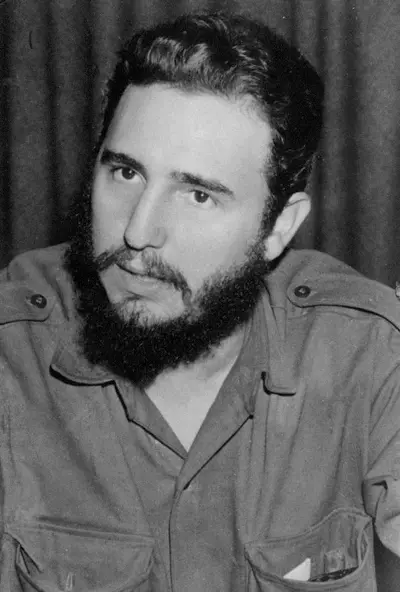
- Born: August 13, 1926
- Died: November 25, 2016
- Nationality: American
- Profession: List Awards
Fidel Alejandro Castro Ruz better known internationally as Fidel Castro, was a Cuban revolutionary and politician who served as Prime Minister of Cuba from 1959 to 1976 and President from 1976 to 2008. Ideologically a Marxist–Leninist and Cuban nationalist, he also served as the First Secretary of the Communist Party of Cuba from 1961 until 2011. Under his administration, Cuba became a one-party communist state; industry and business were nationalized, and state socialist reforms were implemented throughout society.
