William Maclay Quotes
France seems travailing in the birth of freedom. Her throes and pangs of labor are violent…. Royalty, nobility, and vile pageantry by which a few of the human race lord it over and tread on the necks of the their fellow mortals, seem like to be demolished …. Ye Gods, with what indignation do I review the late attempt of some creatures among us to revive the vile machinery. Oh Adams, Adams what a wretch thou art!
While France was in the midst of a violent revolution, the American debate was on the power and prestige of the Presidency. Then Vice President John Adams was a proponent of a strong executive. Most others were not.
William Maclay, 1737-1804, U. S. Senator (Democrat, PA), Personal Journal
Sourced by: Eigen's Political and Historical Quotations


Constitutional Bishops in Revolutionary France were elected by the people, not appointed by a hierarchy. Upon hearing the motion, the assembly rose to its feet and passed it by acclamation. This was the end of the French Monarchy and the nobility—for a while.


The slogan was made famous by James Larkin, 1875–1947, Irish trade union leader who used it frequently and whose memorial statue in Dublin contains the quotation in French, English and Irish.

the Dutch monarchy supported by England The French fear of course was that the revolutionary fervor spreading to the bourgeois could easily spread to France, and that is exactly what happened 4 years later. See {639769} for more of his view on the Dutch revolutionary spirit that might infect France.


Honore Gabriel Victor Requiti. The French King had just opened the French National Assembly which contained deputies (delegates) from the clergy, the nobility and the people. The King had made what some deputies thought was a very constructive and responsible speech opening the assembly. Mirabeau observed that as long as there was an absolute monarch in place, even a benign one. It was the presence of a monarch itself that was evil.

In the election of 1800, the Jeffersonian republicans were pitted against the John Adams Federalists. The latter had seen the revolution as against the excesses of England and King George and not necessarily against the notion of a class society where government served the interests of the upper class—a political battle that is still with us to some extent. The Jewish religion generally recognizes no right of theocratic authority of one man over others with all to follow the laws of God, was theologically very republican. Rabbis were teachers and had no theological or civil authority. To Nones and many other Jews the Jeffersonian ideals were very close to their religious and cultural tradition and to the extent that there has been a party of the classes and a party of the masses, most Jews had gravitated to the latter with the exception of merchants, bankers and others whose economic interests were with the right of center party.


This newspaper was his communications outlet.

This was published after he died.
The organization sent 2,100 volunteers to fight for South American independence from Spain.

Helen Keller was a remarkable woman who was blind and deaf, and yet she became a great orator and social reformer.


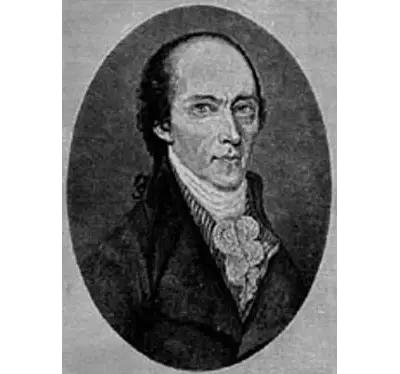
William Maclay was a politician from Pennsylvania during the eighteenth century. Maclay, along with Robert Morris, was a member of Pennsylvania's first two-member delegation to the United States Senate. Following his tenure in the Senate, he served in the Pennsylvania House of Representatives on two occasions, as a county judge, and as a presidential elector. He is known for his journal providing historical information on the 1st United States Congress.
