Niccolo Machiavelli Quotes
In the course of time, however, the insolence of the nobles … induced the people to rise…. The nobility, to save a portion of their power, were forced to yield a share of it to the people.
This was published after he died.
Niccolo Machiavelli, 1469-1527, Florentine statesman and political philosopher, Discourses on the First Ten Books of Titus Livius, 1531
Sourced by: Eigen's Political and Historical Quotations


Ironically, it was a German democracy that later elected Adolf Hitler.


In 1927 there was a Peasant Uprising in the Hunan Province of China. Young Mau went there and wrote a report. Corruption has plagued China for millennia. As can be seen by this quotation, Mao thought that a “people’s revolution” would end corruption and despite capital punishment for corruption under the Communist government, corruption still thrived. By the 21st century corruption was common among local Communist Party Officials despite national party and government attempts to obliterate it.


This quotation shows why the wealthy aristocracy hated Jefferson although he himself was one of them. In this sense he was the forerunner of Franklin and Theodore Roosevelt (see {585244},) the latter of which was called a traitor to his class.

He was executed for rebellion at age 29. However, a number of his followers went on to leadership positions in the reforms that followed. The Shogun was the military ruler of the country subject only to the Emperor. In the logic of Japan at the time one could call for revolution against the Shogun and not be disloyal to the Emperor.


Indeed, that is just what happened. The Fascists were seen by the Government as preferable to the left wingers. The fascist rebels were soon fighting with the establishment monarchists against the Republicans.


While France was in the midst of a violent revolution, the American debate was on the power and prestige of the Presidency. Then Vice President John Adams was a proponent of a strong executive. Most others were not.
Louis Napoleon had seized control of France and had very little popular support amongst the aristocracy and middle class. However, the Socialists leading the uprisings frightened them more than Louis Napoleon as the Socialists had the support of the peasants who resented the abuses of the aristocracy and many of the middle class. This was true class warfare and not at all what was possible in the United States when American conservatives would claim “class warfare” when there was a move for more progressive taxation. In Europe, class warfare really meant death and destruction, so for many who knew the history, the claim of “class warfare” was frightening and a large part of the “Red Scare” in the United States.


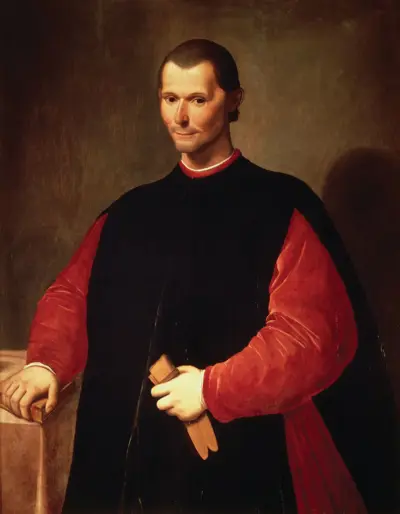
Niccolò di Bernardo dei Machiavelli was an Italian Renaissance diplomat, philosopher and writer, best known for The Prince (Il Principe), written in 1513. He has often been called the father of modern political philosophy and political science.
