Aristotle Quotes
Revolutions break out when opposite parties, the rich and the poor, are equally balanced, and there is little or nothing between them.
Aristotle, 384-322 BC, Greek Philosopher & Teacher, Politics, 343 BC
Sourced by: Eigen's Political and Historical Quotations


Bryan's concept of struggling masses included farmers and small businessmen.


Chesterton preceded by almost half a century much of the intellectual dispute of the War on Poverty of the 1960’s where much of the middle and upper class tried to change a variety of behavior patterns and customs and values of the poor.

1st Earl of Beaconsfield. See Thomas Jefferson for a similar view.

Referring to the newly imposed income tax:


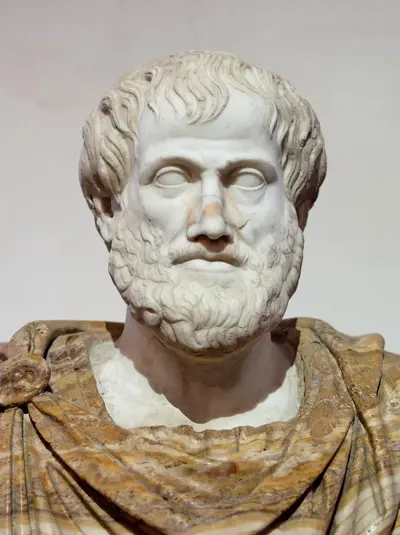
Aristotle (/ærɪˈstɒtəl/; Greek: Ἀριστοτέλης Aristotélēs, pronounced [aristotélɛːs]; 384–322 BC) was a Greek philosopher and polymath during the Classical period in Ancient Greece. Taught by Plato, he was the founder of the Lyceum, the Peripatetic school of philosophy, and the Aristotelian tradition. His writings cover many subjects including physics, biology, zoology, metaphysics, logic, ethics, aesthetics, poetry, theatre, music, rhetoric, psychology, linguistics, economics, politics, meteorology, geology and government. Aristotle provided a complex synthesis of the various philosophies existing prior to him. It was above all from his teachings that the West inherited its intellectual lexicon, as well as problems and methods of inquiry. As a result, his philosophy has exerted a unique influence on almost every form of knowledge in the West and it continues to be a subject of contemporary philosophical discussion.
