Herman Gorter Quotes
To judge from all Communist papers, magazines and brochures, and from all public assemblies, one might even surmise that a revolt of the poor peasants in Western Europe might break out at any moment!
Gorter, Herman. Open Letter to Comrade Lenin. Wildcat, 1989.


And as the leader of the exploited, after his revolution he became a dictator himself, albeit a very popular one amongst most Cubans.


Ironically, it was a German democracy that later elected Adolf Hitler.


Although he was a Marxist, he was also a democrat. He was one of the first leftists to criticize the Russian Revolution. The letter was widely published. There were few left wing intellectuals who would take Lenin on at the time but Gorter was one.


The letter was widely published. There were few left wing intellectuals who would take Lenin on at the time but Gorter was one. The immediate quotation shredded a brochure that Lenin had produced for world wide communism where he was critical of other left wing movements.


The nobles of the city were in rebellion and fought the English Prince of Wales. When the city was taken, the poor people as well as the nobles were executed for their part in the “rebellion.” However, the poor had no say in the matter, and it was not they who ordered the city gates shut and decided to undergo a siege, which in this case was not successful. Limoges was a heavily walled city, well provisioned for a siege, but the English had miners who undermined part of the city walls and crashed them into the moat and allowed the English to walk in easily.


The major problem at the time was not the capitalist in the industrial revolutionary sense of the word as there was little industry. China as an agrarian society but the vast majority of the land was owned by relatively few wealthy families. It was close to a feudal system and that was the target for the Communists and their revolution. There was a very small proletariat. Their methods were brutal, but they executed the landlords and the class warfare ended quickly. Sun Yat-sen was not able to solve the land problem, nor was Chiang Kai-shek as most of his major supporters were landowners of warlords who controlled the landowners.


Hoover’s testimony not withstanding, communism in America never did spread like an epidemic.

The occasion for the speech was the 60th birthday of Russian Premier, Joseph Stalin.

The term “class warfare” was in the early 21st century used by conservatives whenever anyone criticized the rich or advocated raising taxes on the rich. These conservatives had little concept of what class warfare really is and was. This quotation illustrates the real class warfare which existed on a few occasions in American history.
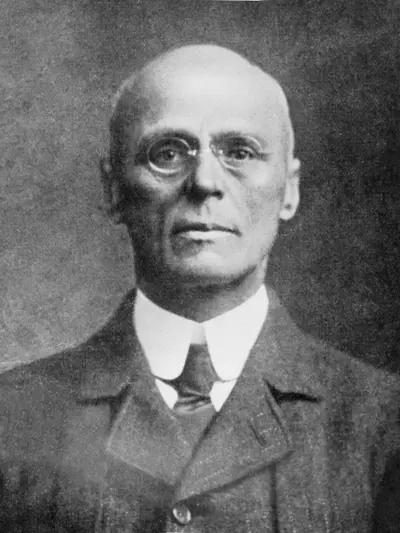
Herman Gorter was a Dutch poet and socialist. He was a leading member of the Tachtigers, a highly influential group of Dutch writers who worked together in Amsterdam in the 1880s, centered on De Nieuwe Gids (The New Guide).
