Henry Miller Quotes
We have two American flags always; one for the rich and one for the poor. When the rich fly it, it means that things are under control; when the poor fly it, it means danger, revolution.
Henry Miller, 1891-1980, Writer, The Air Conditioned Nightmare, 1941
Sourced by: Eigen's Political and Historical Quotations


After Roosevelt, most eras of American politics more or less followed the pattern Roosevelt described herein as a “calamity”, with the anger becoming more or less intense. Jefferson thought that these were natural divisions of politics in all societies--{604810}. The thing that masked this for years was race and slavery. In Lincoln’s time there were liberals and conservatives in both parties if race were ignored. In Theodore Roosevelt’s era, he, Taft and others were generally liberal reformers, while a large number of Republicans were conservative supporters of the status quo. Some democrats were radical reformers like William Jennings Bryan while others were arch conservatives. Until 1964 and the Civil Rights Act there were many conservatives in the Democratic Party, but almost all switched to the Republican Party in anger. The Republican conservatives tended to drive the Republican liberals out of the party and for the last part of the 20th century Roosevelt’s “calamity” well described the American political scene, and the anger increased carrying partisan bitterness into the 21st century.


This was his most famous speech.


1st Earl of Beaconsfield. See Thomas Jefferson for a similar view.

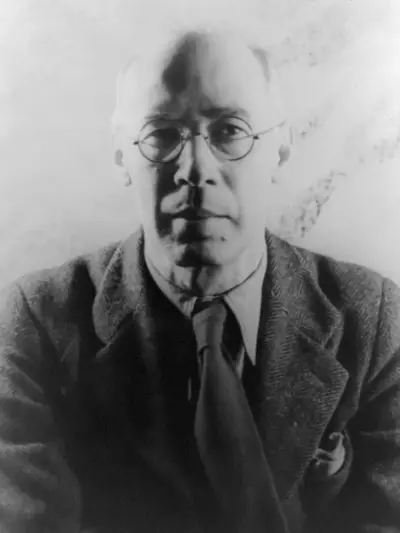
Henry Valentine Miller was an American writer and artist. He was known for breaking with existing literary forms and developing a new type of semi-autobiographical novel that blended character study, social criticism, philosophical reflection, stream of consciousness, explicit language, sex, surrealist free association, and mysticism. His most characteristic works of this kind are Tropic of Cancer, Black Spring, Tropic of Capricorn and The Rosy Crucifixion trilogy, which are based on his experiences in New York and Paris (all of which were banned in the United States until 1961). He also wrote travel memoirs and literary criticism, and painted watercolors.
