Richard Whately Quotes
We find—in the case of political affairs—that the most servile submission to privileged classes, and the grossest abuses of power by these, have been the precursors of the wildest ebullitions of popular fury,—of the overthrow indiscriminately of ancient institutions, good and bad.
Richard Whately, 1787-1863, Irish Political Economist & Archbishop of Dublin, Annotations on Bacon’s Essay, Of Innovations
Sourced by: Eigen's Political and Historical Quotations


This was published after he died.


China had learned to grow new crops from the Americas and their greater ability to produce food led to large population growth which was straining the other national resources and the economy, technology and government could not handle the growth, producing much unhappiness and discontent.

He was referring to the public unrest and dissatisfaction when an middle, poor or impoverished class is ground down by rigid interpretation and contract laws so that people in debt can rarely get out. He argues that this was a stark reality before most revolutions and a primary cause.


This unusual quotation was made to historian Ron Radosh. before Bnnon qA ppoibnrws to a critical position in government by Donald Trump. It is not known if Trump was aware of the radical thinking of this man who was joining a conservative, republican Administration in a national security role.


The slogan was made famous by James Larkin, 1875–1947, Irish trade union leader who used it frequently and whose memorial statue in Dublin contains the quotation in French, English and Irish.


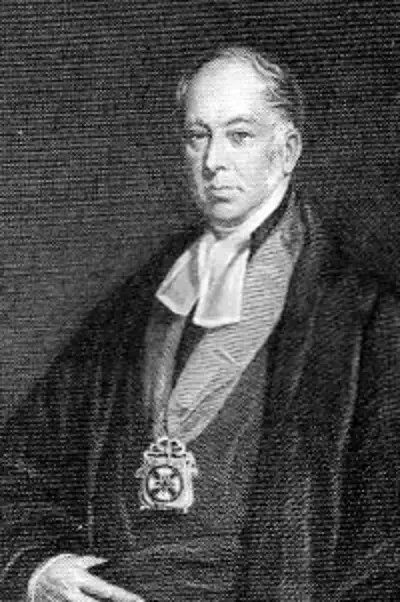
Richard Whately was an English academic, rhetorician, logician, philosopher, economist, and theologian who also served as a reforming Church of Ireland Archbishop of Dublin. He was a leading Broad Churchman, a prolific and combative author over a wide range of topics, a flamboyant character, and one of the first reviewers to recognise the talents of Jane Austen.
