Maximilien Robespierre Quotes
They (tyrants) should be attacked, not as ordinary enemies, but as assassins and rebellious brigands. Kings, aristocrats, tyrants, whoever they may be, are slaves in revolt against the sovereign of the land, who is the human race, and against the legislator of the Universe, who is Nature.
Maximilien Robespierre, 1758-1794, French Jacobin Revolutionary, Member, National Assembly & Committee of Public Safety, April, 1793
Sourced by: Eigen's Political and Historical Quotations


The lightening referred to as Franklin’s famous electrical experiments whereby he saved millions of lives by inventing the lightening rod which he gave freely to all and did not try to patent it. For the French, he was by far, the greatest of the Americans.


Chile with help from San Martin had ejected the Spanish. O’Higgins, the Chilean leader had joined up with San Martin and served under his command. The sectional rivalry bothered men like Carrera. Instead of seeing all the South Americans fighting the Spanish as allies as O’Higgins did, Carrera and his brothers refused to join a government of unity and they and their troops were just as dictatorial and cruel as the Spanish had been. O’Higgins gave Indians and Blacks equal rights with whites which distressed the aristocratic Carrera’s. Finally the Carrera’s tried to set up their own government, and the new Chilean government disarmed their militia and executed two of the three Carrera brothers who were leading the militia troops who were little more than thieves and brigands.


While France was in the midst of a violent revolution, the American debate was on the power and prestige of the Presidency. Then Vice President John Adams was a proponent of a strong executive. Most others were not.

Most Canadians supported the English despite the letter.


The first sentence of this quotation was a favorite of Paine's. He had earlier used it in Common Sense in 1776. See {635451}.
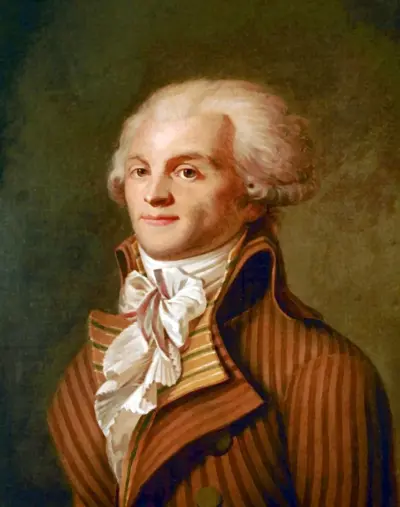
Maximilien François Marie Isidore de Robespierre was a French lawyer and statesman who was one of the best-known and most influential figures of the French Revolution. As a member of the Constituent Assembly and the Jacobin Club, he campaigned for universal manhood suffrage and the abolition both of celibacy for the clergy, and slavery. In 1791, Robespierre became an outspoken advocate for the citizens without a political voice, for their unrestricted admission to the National Guard, to public offices, and for the right to carry arms in self-defence. Robespierre played an important part in the agitation which brought about the fall of the French monarchy on 10 August 1792 and the summoning of a National Convention. His goal was to create a one and indivisible France, equality before the law, to abolish prerogatives and to defend the principles of direct democracy.
