Victor Hugo Quotes
It is the end. But of what? The end of France? No. The end of kings? Yes.
Hugo, Victor. Things Seen. Harper & Brothers, 1887.

This newspaper was his communications outlet.


Honore Gabriel Victor Requiti. The French King had just opened the French National Assembly which contained deputies (delegates) from the clergy, the nobility and the people. The King had made what some deputies thought was a very constructive and responsible speech opening the assembly. Mirabeau observed that as long as there was an absolute monarch in place, even a benign one. It was the presence of a monarch itself that was evil.


We have come to Paris He had come to Paris with his pupil Wilhelm von Humboldt to personally witness what he regarded as a great event in the history of mankind.

Many American colonists had relatives and friends in England, and Paine argued that American independence would help and not het the English people.


Cromwell was not opposed to monarchy per se as long as it was reasonably checked. He saw Charles II as a terrible monarch. After deposing Charles, he and his associates had to come up with some form of government. As “Lord Protector” he was a de facto monarch without the trappings.


Many people think that the French Revolution was spontaneous. Some events at the beginning were, but de Gouges and other political observers cold see that disaster was looming.
the Dutch monarchy supported by England The French fear of course was that the revolutionary fervor spreading to the bourgeois could easily spread to France, and that is exactly what happened 4 years later. See {639769} for more of his view on the Dutch revolutionary spirit that might infect France.

William V, Prince of Orange, was a very hapless monarch of Holland who was ineffective in dealing with revolutionary discontent despite help and support of England. The King of England was resigned to Holland becoming, like France, a Republic. The English statesmen and diplomats, while aiding William, were also secretly providing money and other assistance to the Patriot rebels, to ensure good relations with the Dutch republican leaders.


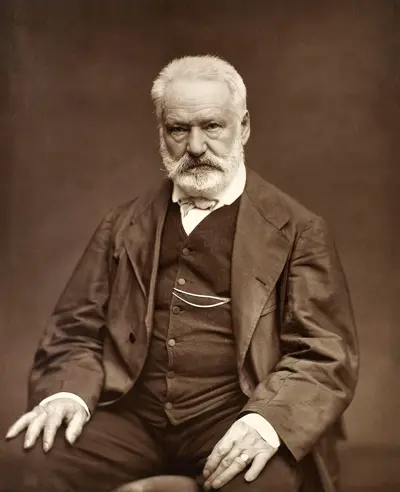
Victor-Marie Hugo was a French poet, novelist, and dramatist of the Romantic movement. During a literary career that spanned more than sixty years, he wrote abundantly in an exceptional variety of genres: lyrics, satires, epics, philosophical poems, epigrams, novels, history, critical essays, political speeches, funeral orations, diaries, letters public and private, as well as dramas in verse and prose.
