Louis Antoine de Saint-Just Quotes
The Revolution has grown cold; all its principles are weakened; there remains only red caps worn by intriguers. The exercise of terror has made crime blasé, as strong liquors made the palace blasé.
Louis Antoine de Saint-Just, 1767–1794, French Revolutionary Leader, 1794
Sourced by: Eigen's Political and Historical Quotations


His words did indeed stimulate a reform movement which was “combative” in the sense that they contested and won the next election.

The Roman Catholic Defender Organization had about 300 thousand volunteers, and Belfast was the central location of the Defender leaders.
the Dutch monarchy supported by England The French fear of course was that the revolutionary fervor spreading to the bourgeois could easily spread to France, and that is exactly what happened 4 years later. See {639769} for more of his view on the Dutch revolutionary spirit that might infect France.


Honore Gabriel Victor Requiti. The French King had just opened the French National Assembly which contained deputies (delegates) from the clergy, the nobility and the people. The King had made what some deputies thought was a very constructive and responsible speech opening the assembly. Mirabeau observed that as long as there was an absolute monarch in place, even a benign one. It was the presence of a monarch itself that was evil.

He was also the primary planner of the assassination. He was executed for his crime which not only killed Sedat but also a diplomat and a Christian Cleric. Iran named a street in Tehran for Islambouli in 1981 in honor of his “martyrdom.”


While France was in the midst of a violent revolution, the American debate was on the power and prestige of the Presidency. Then Vice President John Adams was a proponent of a strong executive. Most others were not.
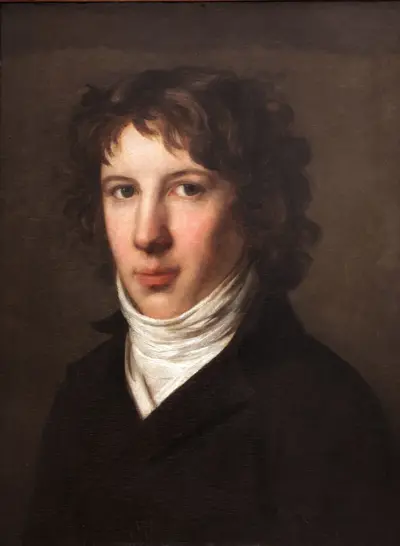
Louis Antoine Léon de Saint-Just was a Jacobin leader during the French Revolution. He was a close friend of Maximilien Robespierre and served as his most trusted ally during the period of Jacobin rule (1793–94) in the French First Republic. Saint-Just worked as a legislator and a military commissar, but he achieved a lasting reputation as the face of the Reign of Terror. He publicly delivered the condemnatory reports that emanated from Robespierre and the Committee of Public Safety and defended the use of violence against opponents of the government. He supervised the arrests of some of the most famous figures of the Revolution and saw many of them off to the guillotine. For his unyielding severity, later writers dubbed him the "Angel of Death".
