Louis XIV Quotes
We are working constantly to abolish all the tolls which are collected on the navigable rivers
The reason that there were tolls on rivers is that the king or one of his predecessors had granted someone (often one who paid the king) the right to do so. However, the practice became a stranglehold on commerce.
Louis XIV, 1638-1715, King of France, Letter to the Town Officers and People of Marseilles, August 26, 1664
Sourced by: Eigen's Political and Historical Quotations


This is one of the earliest examples of the establishment of a type of Commerce Department – a government institution to look after the commercial affairs of the state.


The Dutch King’s brother, Emperor Napoleon Bonaparte Bonaparte, insisted on Dutch contributions to his war effort in the way of Dutch troops, ships and provisions. Yet there was not enough possible revenue to pay for such a war effort. Gogel was able to introduce efficiencies in many areas but still more taxes were needed. War expenditures took all the resources of the state and progress stopped and the kingdom was almost destroyed by the economic crisis.


The profits that England made on the North American Colonies and the Caribbean were very large. 10 years before the American Revolution most sophisticated English politicians realized that and one of the reasons the British fought so hard to keep America from Independence was that money.

In the 19th century, most socialists thought that the government was the major creator of jobs. In the 20th century, most socialists acknowledged that jobs could emanate from both the public and private sectors. Here in the 21st century, one of the world’s leading socialists, stated that private companies were necessary for full employment.

The King was always taxing the middle class and the peasants and was extremely unpopular just before the French Revolution. She made some suggestions for taxes that could be levied on the rich. Just as today in America, many of the wealthiest people paid little or no tax, and had the power to pressure the king and the parliament should one ever be debated.


This notion of state owned industries where the profits can pay for some of the costs of operating a government. In modern cases like China, Egypt and Indonesia, the military owned industries the profits of which defrayed the general budget burden. The problem however, has always been that the government tends to give preference to government owned industries in purchases and the lack of competition generally produces inefficient companies over time.

The Germans, having invaded France and other countries in WWI, were determined in the Treaty of Versailles to be responsible for the war. They were to pay reparations to France and other countries to cover the costs to those countries of financing the war and rebuilding what the German invasion destroyed. But Germany too was destitute and needed capital to rebuild and if they paid the reparations whey would have to lay a very heavy tax on all Germans and still would not have enough to rebuild their nation and economy. What made the situation much worse was the fact that most of the wealthy German capitalists—many of whom had profited from supplying military weapons and supplies during the war—took all their money out of Germany, so the wealthiest Germans could not be taxed much at all. Auld, and many others tried to find an equitable solution, but that never happened and German resentment carried over into WWII where the Germans again invaded France.

Hunting and fishing had been much restricted to aristocrats for whom it was a sport. But for common people it was part of subsistence. Just like so many corporations and wealthy people end up paying lower tax rates than the average person in modern American society, in Holland then it was the aristocrats who paid little or no taxes. And much of the tax revenue went to provide them with an opulent lifestyle. Ending their tax exemptions and their subsidies, would lower taxes on everyone else. And democracy would give the people control over the government. Daendels had in earlier years fled to France when his first Dutch revolutionary efforts failed and he had a price on his head. He was in Paris during the French Revolution and was an enthusiastic supporter. For his support and with his military experience not associated with royalty, he was made a General of the Revolutionary French Army. When the Dutch Patriots tried again to revolt, the new French Government took their side and sent Daendels to Holland at the head of a small French Army to protect the Patriots. This was his position when he issued this proclamation to the great distress of William V and his supporters.
Daendels had in earlier years fled to France when his first Dutch revolutionary efforts failed and he had a price on his head. He was in Paris during the French Revolution and was an enthusiastic supporter. For his support and with his military experience not associated with royalty, he was made a General of the Revolutionary French Army. When the Dutch Patriots tried again to revolt, the new French Government took their side and sent Daendels to Holland at the head of a small French Army to protect the Patriots. This was his position when he issued this proclamation to the great distress of William V and his supporters.

In this case the tariffs were imposed not to protect national industries but to simply raise revenue. In the early years of the United States, almost all of the Federal Revenue was raised this way.

While the majority of the country approve of a financial transaction tax on the stock market, the financial industry has always fought it tooth and nail. It was a long tradition that the Barons and leading aristocrats lands were exempt from the taxes of the king, the most powerful forces in a democracy have lobbied to avoid taxation on their enterprises and finance is one of the very few business areas that have avoided taxation in America. Other than not liking taxes in general, Wall Street and the Banks argue that many financial transactions involve buying and selling securities in huge volume and making a tiny percentage on each share. If there were a tax of even a fraction of one percent, all these profitable trades would become unprofitable. Critics argue that that kind of speculating does not help the economy at all, and is what makes the discriminatory, unfair, computer trading possible and it would be a good reform to make that kind of trading unprofitable as more than 99 percent of the people cannot participate in it nor profit from it.

Most Republicans at the time were beholden to corporations and business who then demanded high tariffs and other protectionisms so they could maintain high prices and not have to compete with British and European imports. Roosevelt and a few other reform Republicans were free traders along with most Democrats. Roosevelt had so many other reforms in the fire that he decided not to take this one on at the same time and thought that the benefit would not be good enough for the nation to offset the open civil war of the Republican Party that would ensue. In the latter half of the 20th century, large American companies had opened or invested in foreign corporations and/or were manufacturing many of their products abroad. So they then advocated free trade. When they did, the Republican Party flip flopped and adopted free trade as one of its basic principles. Meanwhile, the Democrats who were free traders in the early 20th Century had become protectionists by the end of the 20th century as labor movement wanted to protect American jobs.


His predecessors had lied about the status of the Greek Economy and then squandered the money with waste, fraud, and corruption. To avoid total national bankruptcy, Greece needed a large bailout which was given subject to a set of required conditions of reform and transparency. This “austerity” package created a great hardship for many of the average Greek citizens while the wealthy who had benefitted from the previous incompetence and corruption took their money out of the country. The Greek voters elected a new government without much experience but who were committed to lifting the burden of the austerity package. The problem was that the major nations of the Eurozone, whose taxpayers would have to pay for the bailout, had been burned before by Greek government lies and incompetence and did not trust the Greeks, insisting on the austerity measures if any bailout money would be forthcoming. The new Greek government was caught in a great dilemma. Agree to the same kind of Austerity package and continue the great hardships on the people or go into Bankruptcy and leave the Eurozone the consequences of which would probably be worse. The finance minister was hoping for a compromise.


At the beginning of the dispute between America and England, the issue was the raising of internal American taxes by Parliament without any American representation in Parliament. The issue escalated and when the British began using force, independence then became the American objective.
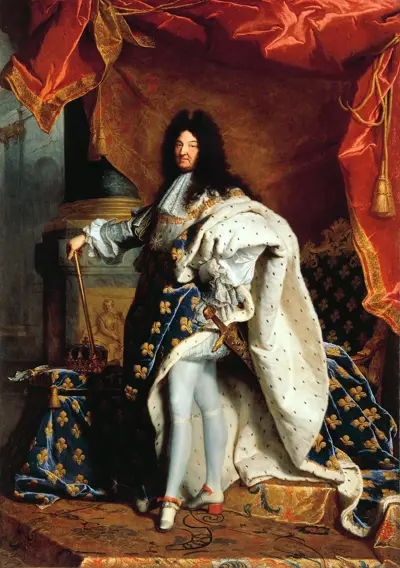
Louis XIV, also known as Louis the Great (Louis le Grand) or the Sun King (le Roi Soleil), was King of France from 14 May 1643 until his death in 1715. His reign of 72 years and 110 days is the longest recorded of any monarch of a sovereign country in European history. Louis XIV's France was emblematic of the age of absolutism in Europe. The King surrounded himself with a variety of significant political, military, and cultural figures, such as Mazarin, Colbert, Louvois, the Grand Condé, Turenne, Vauban, Boulle, Molière, Racine, Boileau, La Fontaine, Lully, Charpentier, Marais, Le Brun, Rigaud, Bossuet, Le Vau, Mansart, Charles Perrault, Claude Perrault, and Le Nôtre.
