Paul Lafargue Quotes
The railway monopoly is so exorbitant that a company can ruin at will an industry or a town by differential or preferential tariffs. The danger to which society is exposed by the private ownership of the means of transport is so keenly felt that in France, England and the United States, many capitalists in their own interests demand the nationalization of the railways
Paul Lafargue, 1841-1911, Leader, French Workers Party, Son-in-law of Karl Marx, Socialism and Nationalization, June 1882
Sourced by: Eigen's Political and Historical Quotations

The first part of this quotation has defined the attitude of most Americans towards private enterprise and government since then. The second part of the quotation—the undesirability of public ownership of railroads has given way to the modern problem that no passenger railroad can be operated profitably by anyone—private or public. So Roosevelt’s “far-reaching disaster” was finally complete with the Federal Government taking over responsibility for Amtrack.


Ironically the far right wing Fascists and the far left wing Communists agreed on this point: nationalization.


At that period of American History, the Republicans supported high tariffs and protectionism for American companies and it was the Democrats who were the advocates of free trade. Later each of the parties would flip flop their positions and then say that they were advocating their traditional principles.


This is a very interesting quotation in that right wing parties are usually opposed to any kind of Government ownership and control of business and industry. However, Fascist parties have usually wanted to commandeer business and industry for the central purposes of the dictatorial state. The French National Front Party had its roots in the WWII French Vichy Government—which was allied with the Nazis to bring Fascism and racism to France.


The railroad monopolies had been abusing their workers for years and this strike brought most of the railroads to a standstill. Since the public and much economic activity depended on the railroad, the Railroad managers tried to get the government to use the U. S. Army to break the strike rather than negotiate in good faith with the railroad labor unions.

While this statement seems totally absurd to us today, at the time most politicians and judges believed it. Only the left wingers and the populists opposed the doctrine as well as most business owners who knew the truth but of course most preferred the have their own monopoly. One of the reasons the large American corporations did not want Jewish and Chinese immigrants is that those cultures supported highly competitive businesses and might give consumers a better deal or worse, their culture would argue for less monopoly and more competition. For more than half a century AT&T was given a monopoly over almost all telephone service in the United States. Finally the Federal Courts saw through the company propaganda, and ordered AT&T broken up. The “Baby Bells” have persuaded most state legislatures and regulatory bodies of this same argument, and almost every community of the United States has a monopoly on local wired local telephone service. The same is true about water and electricity and a great deal of American transportation. Every major company strives for as much of a monopolistic position the government will allow; some are overt like the electrical companies. Others are more subtle and use copyright and patents to be sure that there is no price or service competition. Fortunately, the high tech industry is to technologically competitive that prices have been have been going down constantly not like telephone and Internet connectivity, entertainment, education, and professional services.


While Roosevelt was considered a radical by ultra-conservatives, he was actually considerably to the right of William Jennings Bryan, the Democrats, and most of the populists of day who wanted much more draconian solutions to the abuses of corporations.


She had done a monumental exposé of the Standard Oil Company illegal and immoral activities. The public was so aroused that many reforms were instituted and the Standard Oil Company Trust was broken up into many smaller companies. Tarbell was then, in the words of S. S. McClure, “the most famous woman in America.”
The Elkins Act was a cornerstone of Roosevelt’s “Square Deal” program. It authorized the Interstate Commerce Commission (ICC) to impose heavy fines on railroads that offered rebates, and upon the shippers that accepted these rebates. The large corporations and monopolies would get rebates from the railroads and thus pay far less than their smaller competitors to ship their goods. It drove thousands of small companies out of business. This was a basic part of American law until the deregulation of the latter part of the 20th century. So what had been illegal, unethical, and immoral for almost a century, became legal, ethical and moral, but again discriminated against small companies.
The President and his new appointee were half joking but many of the large corporations were attacking the new department and its head frequently. The extreme conservatives used the technique of personally discrediting the head of the agency to discredit the agency and its activities. The President himself was so popular that they did not dare attack him.

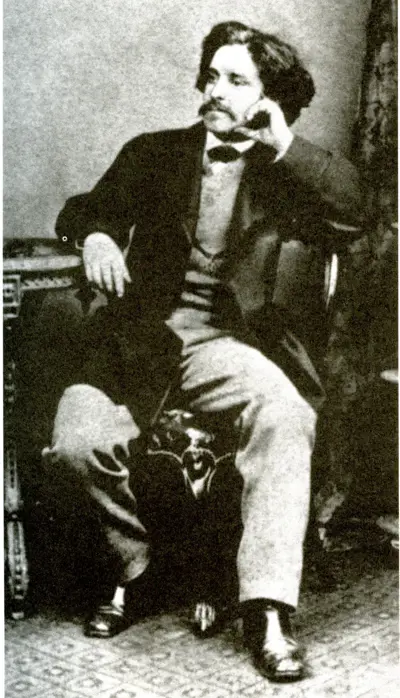
Paul Lafargue was a French revolutionary Marxist socialist, political writer, journalist, literary critic, and activist; he was Karl Marx's son-in-law having married his second daughter, Laura. His best known work is The Right to Be Lazy. Born in Cuba to French and Creole parents, Lafargue spent most of his life in France, with periods in England and Spain. At the age of 69, he and 66-year-old Laura died together by a suicide pact.
