Henry Morgenthau Jr. Quotes
Economic aggression can have no other offspring than war. It is dangerous as it is futile.
Henry Morgenthau Jr., 1891–1967, U. S. Secretary of the Treasury (Democrat), Speech to the the “Bretton Woods Conference” delegates, United Nations Monetary and Financial Conference, Bretton Woods, NH, July 1944
Sourced by: Eigen's Political and Historical Quotations


There was much political Japanese opposition to attacking the United States. Most military judgments were that Japan could not win such a war. The militarist hawks in the Japanese leadership argued that while Japan might not be able to defeat the U. S., Japan could not be defeated in the Pacific. And the U. S. would not spend the money to rebuild their navy of the Japanese could destroy most of the capital ships with surprise attack. Therefore starting a war might provide the opportunity to negotiate for more favorable terms and less pressure, boycotting, and castigation of Japan by the United States and they could come out with control of a number of lands of the Pacific. However, the Naval Chief of Staff told the Emperor that war ight be inevitable as America or Great Britain might attack one of the Japanese held territories and force Japan into war. Later, the Japanese conservatives and Militarist hawks, were able to purge opponents of war from the Cabinet, and when they had control of the government, convinced the Emperor to flip flop, and started WWII with the Attack on Pearl Harbor.


_0_thumbnail_47x47.jpg "Statue of Robert Hall in Leicester.")
Sometimes it may be BOTH parties who are guilty of injustice.


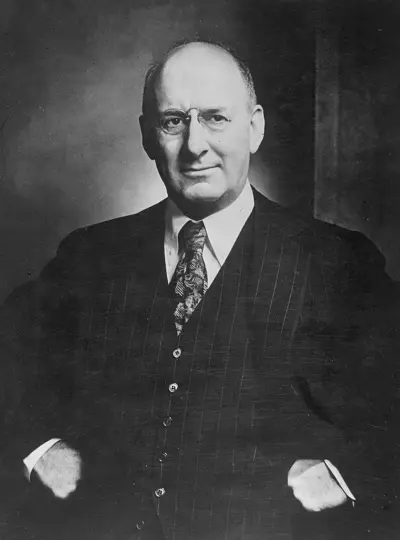
Henry Morgenthau Jr. was the United States Secretary of the Treasury during most of the administration of Franklin D. Roosevelt. He played a major role in designing and financing the New Deal. After 1937, while still in charge of the Treasury, he played the central role in financing United States participation in World War II. He also played an increasingly major role in shaping foreign policy, especially with respect to Lend-Lease, support for China, helping Jewish refugees, and proposing (in the "Morgenthau Plan") to prevent Germany from again being a military threat.
