Albert J. Beveridge Quotes
Most future wars will be conflicts for commerce.
Albert J. Beveridge, 1862-1927, U. S. Senator (Republican, IN), Founder, Progressive League, Campaign speech, 1900
Sourced by: Eigen's Political and Historical Quotations


In international law, a blockade is an act of war by the brocading country against the country that is blockaded—not against 3rd parties that may have to obey the blockade. For example before the War of 1812, France and England were at war and each blockaded the other’s ports. The United States was affected by the blockade in that our ships could not go in or out of blockaded ports with goods. However nether country was at war with us. All neutral nations must respect a blockade or the blockading nation is entitled to use force to enforce the blockade, but that is not an act of war. In 2011, Gaza was at war with Israel, and Israel blockaded Gaza. A Turkish ship tried to bring goods to Gaza and Israel seized the ship by force and brought it into a near natural port (Egypt). Israel was entitled to enforce its Gaza blockade, but they were not at war with Turkey. However if Israel, blockaded a country where there was not an existing war, the blockade itself would be an act of war.

Water has always been in short supply in the Middle East. For thousands of years in the past water rights and possession was the cause of many conflicts. The rapid increase in fertility and population in the Muslim countries of the Middle East has placed even more stress on the water supply while waste is common. Fortunately Israel and Turkey have developed many techniques of using water efficiently. However, the rest of the Middle Eastern nations are slow to adopt these methods of water conservation, water generation and production, and agriculture that requires much less water than in the past. Politics, religion, and culture can be barriers or facilitators.


Note that he assumes that not only will there be another World War, but he assumes that we will be on opposite sides.


Classic socialism thought that war was the greatest danger of capitalism. However in the 21st century the consensus was that the great capitalistic danger was failure and collapse of the ley capitalistic institutions like banks in a globalized world such as the 2008 Great Recession.


There were some British politicians who had considered the possibility of supporting the South in the Civil War to assure their supply of cheap cotton. Entering the war by allying with the Confederacy was also a possibility. Lincoln used this phrase and instructed Adams to use that with the British politicians as the result if England get involved with the American Civil war. It is the closest phrase to “World War” until WWI.
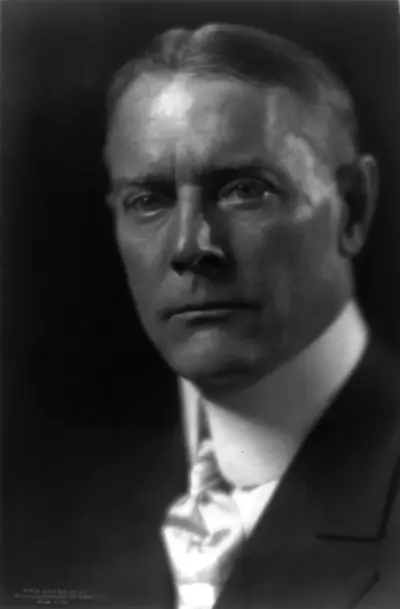
Albert Jeremiah Beveridge was an American historian and US senator from Indiana. He was an intellectual leader of the Progressive Era and a biographer of Chief Justice John Marshall and President Abraham Lincoln.
