John MacDonald Quotes
Treat them as a nation and they will act as a free people generally do—generously. Call them a faction, and they become factious.
Advising his countrymen how to treat the minority French Canadians:
John A. MacDonald, 1815-1891, First Canadian Prime Minister (Conservative), Letter to William Chamberlain, 1856
Sourced by: Eigen's Political and Historical Quotations


“Esto perpetua” is Latin for “May it be forever”. Ireland had just obtained the right from England to pass their own laws in their own parliament. They were still under English control but now they were like a colony and not under day-to-day control.


He persuaded many other rulers to join the Indian Union when India became Independent.


Under the treaty between Ireland and England that created the Irish free state, in case of war or other contingency, the Irish Free State was required to allow Great Britain to use specific seaports. However, De Valera hated the English, originally opposed the treaty, and was adamant that the Irish Free State be neutural in WWII. He therefore refused to fulfill the Irish obligation. For Churchill this was the last chance for De Valera to show that the Irish Free State was a real nation with rights and obligations. Interestingly, although De Valera did not want to assist the British fighting the Germans, over 70,000 Irishmen went to England and Volunteered to fight on the British side. There were Irish batallions fighting on the allied side but the Irish Free State was neutural. De Valera made matters worse when he allowed German agents into the Irish Free State to try and go from there to England as well as set up observation posts to guide German bombers attacking the populated city of Belfast and other parts of Northern Ireland. See {639724} for Chirchill’s later reflective commentary on the situation.


This is commemorated by the Cinco de Mayo Mexican holiday celebration.
The Chief Secretary, Lord Castleregh, had put forward a resolution to bring about the unification of Great Britain and Ireland under the single British Parliament at Westminster. He and his allies had bribed a number of the Irish MPs to support the union. With Union some Irish MPs would then be able to win seats representing Ireland in the British Parliament. Although Grattan and most of the Orangemen opposed the Union, 4 months later, the bill passed comfortably. Ironically, Grattan was one of the Irish MPs whose popularity won a seat in the unified British Parliament.


At the partition if India into Hindu and Muslim States, what is now Bangladesh, was a part of Pakistan called “East Pakistan” by the Pakistani government. While India became a thriving democracy, Pakistan with its combination of military strongmen and Islamic Fundamentalists did not fare as well and became a very corrupt, undemocratic military nation. East Pakistan was not contiguous with the rest of Pakistan and was culturally quite different and less religiously fundamentalist. While all Pakistanis suffered from poor government, the East Pakistanis fared worse. Finally, they developed their own identity which was suppressed by the military dictators of Pakistan and the Banglas revolted and Bangladesh became and independent nation.
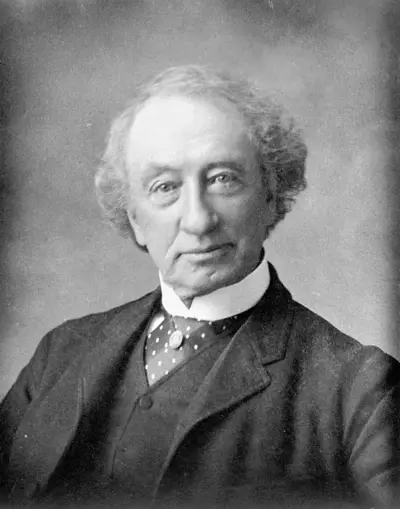
Sir John Alexander Macdonald GCB PC QC was the first prime minister of Canada (1867–1873, 1878–1891). The dominant figure of Canadian Confederation, he had a political career that spanned almost half a century. Macdonald was born in Scotland; when he was a boy his family immigrated to Kingston in the Province of Upper Canada (today in eastern Ontario). As a lawyer, he was involved in several high-profile cases and quickly became prominent in Kingston, which elected him in 1844 to the legislature of the Province of Canada. By 1857, he had become premier under the colony's unstable political system.
